Sunday, November 13, 2005


Kingfisher, OK Sign Posted by Picasa

Entrepreneurial Enid

“They were working in Oklahoma City for Hormel, but decided to start up their own business. They looked around the state and one of their father-in-laws said, ‘You ought to look at Enid, because there are good people there and you are going to need good people in order to grow your business.’ So they moved here and began Advance Foods. Their first product was a chicken fried steak product.” Brian Hayden, VP of HR and Risk Management for Advance Foods (www.advf.com) told me when I was in Enid, OK (population 47,045) keynoting the Business & Industry Forum of Autry Tech.

Advance, which started with eight people in Enid in 1973, today has 1800 employees in the town with expansion plans that will add another 500. The company, with plants in IA, PA, TN and five in Enid has $470 million in sales from over 3,000 products, with plans to more than double to $1 billion in the next five years. It is run by Greg Allen whose dad Paul Allen and Dave McLaughlin started the business and still own it. They specialize in frozen food products. One of their specialties is Philly Style Steak where they control 70% of the $200 million market. If you go to Philadelphia and eat a Philly Steak Sandwich, there is a good chance that the meat came from Enid.

If you are in the spice blending business or have the expertise to start such an operation, Advance is looking for one to locate in Enid. I’d love to be the catalyst for another new business, so let me know if you want to put a plant in Enid.

Enid has been blessed with other companies that have started and developed in the town. Groendyke Trucking with 1700 trucks is run by second generation John Groendyke. Harold Hamm started Continental Resources in the town and has 1,500 employees there with plans to do a public offering in the near future. There were numerous other entrepreneurial companies that I found as the backbone of Enid in my short visit and tour.

Enid was hit hard by the oil crash of the 1980s. In addition to losing a number of drilling and oil service business, it also lost Champlin Refining, which was started and owned in Enid but was sold to Union Pacific Railroad which quickly closed it. The population of Enid fell by over 10% in the 1980s but is now on the upswing.

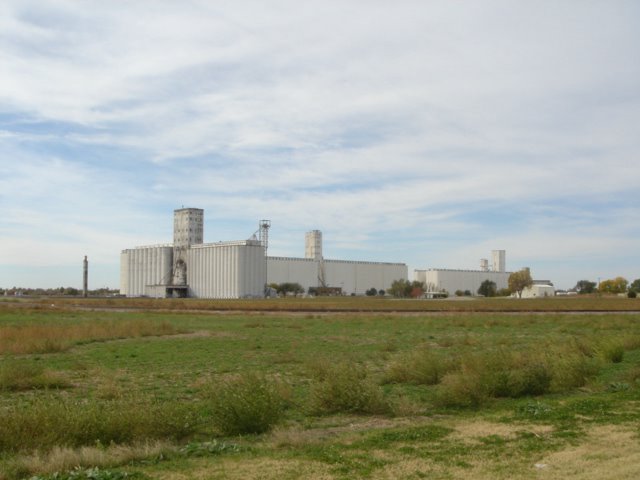
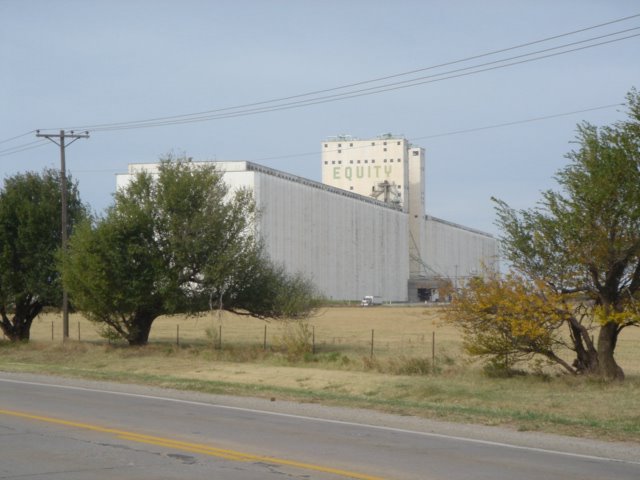
The town was founded in 1893 during the land rush days and was a key stopping point on the Chisholm Trail from Texas to the railroad in Wichita, KS. Wheat was the key agricultural crop and the town has a half dozen or more gigantic elevators. I wrote about my experience with first seeing these “Cathedrals on the Prairie” in a May 26, 2005 blog.

Enid is looking to the future with plans for a new Entrepreneurial Center that Autry Tech, a wonderfully diverse technical school is putting the finishing touches on. Its president, Dr. Jim Strate is an energetic, visionary leader who understands the importance of economic development for Enid and the region. He has turned Autry Tech from an 8 to 4 classroom focused center into one that is geared toward industry with classes on a 24-hour basis, often on site at plants.

Dr. Strate and Enid Mayor Ernie Currier have a focus upon growing the economy of Enid and the region. They are leveraging some existing businesses like Advanced Foods and Vance Air Force Base, which specializes in pilot training, to strategically focus upon value-added food production and aviation related companies. Ground will be broken this spring on a $72 million ethanol plant, the first in OK, and plans are in the works for a biodiesel facility. They’ve also contracted with a company to research profitable businesses where the owner is nearing retirement age. They hope to buy some of these businesses, moving them to Enid.

Enid is thinking out of the box! They have some great things going on. I want to get back to see what they accomplish in the next couple of years.

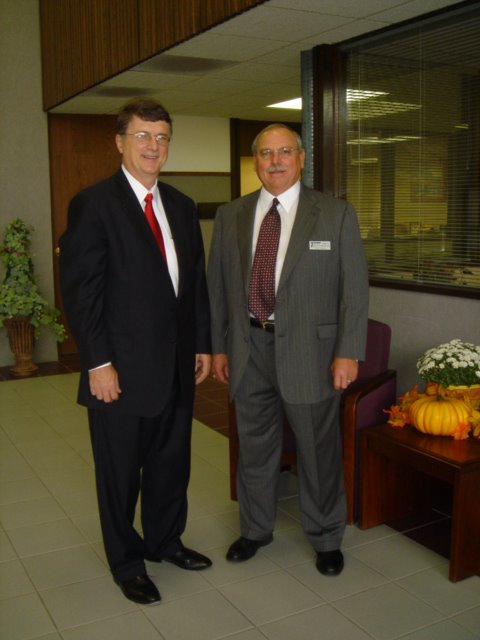
Dr. Jim Strate of Autry Tech and me in Enid, OK Posted by Picasa

Other Grain Elevators in Enid, OK Posted by Picasa

ADM Elevator in Enid, OK Posted by Picasa

Saturday, November 12, 2005

Confession on Importance of Main Street

“I have a confession to make to you. I used to think that putting money into downtowns was a waste of money and a money pit with no return.” That was how I started my talks at annual meetings of the Main Street Associations in TX and IL this past week. It was the first time I’ve ever talked to Main Street Associations and if I had sat down after that first sentence, probably my last. I went on, explaining to them that I came at development from an industrial standpoint and that until I started researching BoomtownUSA, my opinion hadn’t changed about downtowns from when I started in development.

But, as I found in my research over a three-year period on the book and further reinforced in my travels to almost 40 states since publishing last year, the downtowns hold the key to success for communities. I’ve seen the importance of them with helping to build community, creating a sense of place and acting as an anchor for the soul of the town. And, while downtowns have been important in the past, I see them as even more critical in the future.

As people are looking at fleeing the rat race of the large cities, they are often searching for special places that have created a certain “sense of place” of unique towns. Those communities that are redoing their downtowns to include shops, restaurants, entertainment and housing are the ones that are taking it to a special level. Towns like Oxford, MS; Traverse City, MI; and others “get it” and are creating special places that are becoming meccas.

I was wrong for the first ten years of my development career. I’m starting to get it, as I travel around the USA and observe wonderfully vibrant towns. If you don’t have a Main Street program in your town, you should look at establishing one.

Friday, November 11, 2005

Down in the Dumps—But Visioning for the Future

“When I was a kid we had the same population that we have today. We had two hospitals. Now we have none. We had eight doctors, now two. We had five pharmacies, now one. We had five car dealerships, now one.” Eleanor Harren was talking about her hometown of Sinton, TX (population 5,676). “Today, there’s not as much activity in the town and the jobs aren’t nearly as good. This was an oil town with very good paying jobs. Plymouth Oil started here, later becoming Marathon Oil and was headquartered here until it moved to Ohio. We had a zoo and one of the first public parks in the area.”

As we drove around town, I could some of the landmarks of past grandeur like the zoo, Marathon’s HQ, several magnificent parks (Sinton bills itself as “The City of Parks”), a wonderful new library and a municipal golf course. But except for the library, most of these landmarks date back 40 or more years. Sinton is in need of a facelift.

This past Tuesday they started a series of meetings to discuss their comprehensive plan and the development of a vision of where they want to go as a community. I suggested that they include as many facets of the town as possible. I saw potential in the town, but it is going to take a coordinated, cooperative, multi-cultural effort to be able to get Sinton out of the funk that it has sunk into.

I met many people in the town with a desire to remake the town. They came from all facets of society and if they can spend some time working together, working on their common ground rather than what divides them I’m convinced that Sinton’s best days will lie in its future, not in its past.

City Park in Sinton, TX Posted by Picasa

Former Marathon Oil HQ in Sinton, TX Posted by Picasa

Eleanor Harren & Mary Lee Emmert in front of the Sinton, TX Library Posted by Picasa

Thursday, November 10, 2005

Titles=Belonging to Society

“You give people titles and they start to feel they belong to society,” Ernesto Schargrodsky said in his study of societal changes caused by having title to property. The study, as yet unpublished, is featured on the front page of this morning’s Wall Street Journal. Schargrodsky and Sebastian Galiani studied a barrio in Buenos Aires, which was settled by squatters 25 years ago. About half of the residents received title to their property and half did not but are still living in the barrio.

The differences were incredible. Those with titles had significantly lower rates of teenage pregnancy, lower rates of school absenteeism and completed more school than those without. The researchers theorized that a title turns a house into an “insurance and savings tool” that can act as a foundation that supports owners during bad times and into old age.

How does this relate to the agurbs®? As I travel around the USA, I’m seeing recent immigrants having an increasing impact upon small towns and regions. I’m convinced that those towns that can assimilate them the quickest, turning them into property owners, are the ones that are going to be able to create more opportunities for all residents more quickly. Generally, these new immigrants are hard working, law-abiding citizens who have an incredible desire to succeed. After all, we only gain those with enough gumption to get out of their comfort zone and emigrate here. How many of these recent immigrants or their children won’t become the entrepreneurs of tomorrow that will create jobs and wealth in our towns?

Does anyone know of a bank, other financial institution or even a town that has set up a special program to assist these new immigrants in the purchase of a home? If you know of any, please email me at jschultz@agracel.com. It’s something I would like to study.

Love the Pralines—Enchanted by the Entrepreneur

The absolute best pralines that I’ve tasted are made in Sinton, TX (population 5,676) by Eleanor Harren who owns Aunt Aggie De’s Pralines (www.auntaggiede.com). The recipe was from her aunt and Eleanor has been making them commercially since the mid 80s. I was introduced to them by my mother-in-law, Mary Lee Emmert, who sends us a box of them every Christmas. She and Eleanor grew up together in Sinton.

I asked Eleanor how she happened to start the business. She told me, “My kids were all grown up with the youngest in law school, and I wanted to do something. I did some catering for a political event and everyone raved about the food. I started a small catering business, which never made any money, but I sure had a lot of fun. I served pralines as my signature item.”

“I decided to try selling the pralines in stores. I made three batches and took them to three Mexican restaurants in Corpus Christi. They didn’t want to buy them because they thought they were too expensive, so I left them at the restaurant. I told them; see if you can sell them. If you can, you can pay me. If you can’t, you can enjoy them yourself. By the end of the week, each one had called me back to order more. I started calling on stores in my station wagon.”

“That first year we sold about $17,000/month. Now we’re doing $1.5 million per year with 20 employees. When I first started, everyone thought it was a joke that I would get tired of. My husband Henry, who was a local doctor, was very supportive. He passed away 10 years ago and before he died he used to kiddingly say that he was no longer thought of as the town doctor, but rather as Eleanor’s husband.”

Eleanor and Henry were married for 43 years, raising two children. In walking around the town and her business, you could tell that she is very well respected in the community. I was in awe of her.

Here is a lady who is at an age that most people have already decided to slow down. Not Eleanor! She is not only running her company in an innovative manner, but she is feverishly trying to help her town to get back on its feet economically. She is the largest manufacturer in town and one of the major employers. I’ll write more about Sinton in tomorrow’s blog.

Pralines being made at Aunt Aggie De's; Sinton, TX Posted by Picasa

Eleanor Harren in her factory with shipping box Posted by Picasa

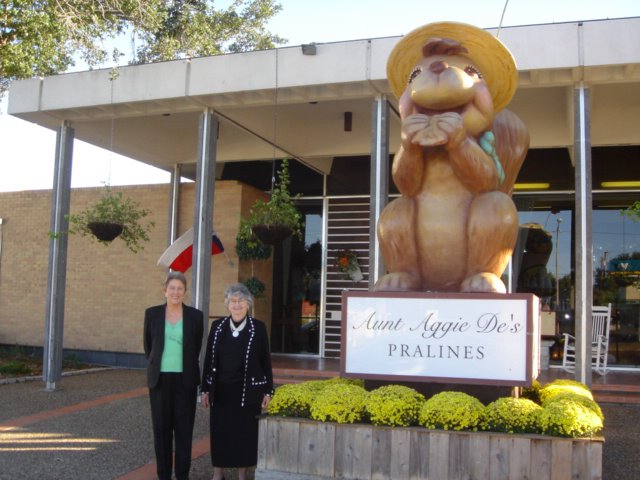
Mary Lee Emmert (my mother-in-law) and Eleanor Harren in front of Aunt Aggie De's Pralines Posted by Picasa

Wednesday, November 09, 2005

ED Passes--By 21 Votes

Last week I reported that Freeport, TX was undergoing a referendum on doing away with their Economic Development organization. The effort to do away with the $450,000 department was spurred by a landowner who was opposed to a city-sponsored marina. The vote was 665 in favor of keeping the EDC, while 644 voted to abolish it, a difference of 21 votes.

Innovative Regional Foundation

“We have 162 towns in our 14 county region, with 60% of them having a population of less than 1,000.” John Kalliszewski, head of the Initiative Foundation (www.ifound.org) in Little Falls, MN (population 7,719) was telling me about his very innovative foundation that was set up in 1986 by William McKnight, one of the 3M founders. Endowed at $37 million it is one of six that McKnight set up throughout the state, keeping all of the foundations regional in approach.

One of their major initiatives is a $10 million economic development loan pool that is primarily focused upon manufacturing in the region. The Initiative Foundation also has a focus upon the creation of intellectual property in the region, funding a special technology capital fund.

Kalliszewski spoke in particular about two MN towns that they had assisted, “We started working in Wadena, MN, a town of about 3,500. The wife of one of the town’s bankers brought up the idea of redoing their downtown. We told them it would probably take $3 million to do what they envisioned. The put together $3.5 million to make their downtown into a jewel. And, this is a town that isn’t on either a lake or an interstate, which many people up here think is critical. Wadena today has an incubator for entrepreneurs that has helped to start 20 or 25 new businesses. They have redone their old railroad depot into a convention center and have started a new youth center, called the Youth Café.”

“Another example is Taylor Falls, MN which has less than 1,000 people. They sit on the St. Croix River. They decided to turn their downtown around so that it faced the river. They build a boardwalk on the river side and have completely redone the image of their community.”

I’d love to visit both of these towns and to learn more about the Initiative Foundation. Stories like this continue to amaze me as I travel around the USA.

Tuesday, November 08, 2005

Why Can’t We Put the Past Behind Us?

Twice this past week I witnessed divisions within communities that I believe are detrimental for everyone involved. These divisions go back decades, if not longer. I’ve had conversations with both groups suggesting that it is in their best long-term interest to put these differences behind them and to find common ground upon which to work together.

In MN, I was told of how many local citizens resent the new wealth of the Mille Lacs Band of Ojibwe, which I blogged on yesterday. There are deep scars that date back to spear fishing on the Mille Lacs Lake.

In TX, there are “silos” in existence in some towns of Anglos and Hispanics. I told several groups in TX during my talks of my observations and suggested that both sides needed to put their past differences behind them, figuring out ways in which to work together.

To be really successful as communities we often have to “bury the hatchet” and begin looking to the future rather than digging up the past. The past can be a major obstacle to being able to build a bright future.

Monday, November 07, 2005

Californians Moving to Midwest

Three is an interesting article in the NY Times this morning on the out migration of people from CA to the Midwest and other locations.

http://www.nytimes.com/2005/11/07/business/07move.html?th&emc=th

Regionalism & Entrepreneurship Spurred by Tribe

“We’ve gone from $300,000 to $6 million invested in entrepreneurs in the Band in the past five years,” Mitch Corbine, executive vice president for corporate operations for the Mille Lacs Band of Ojibwe told me. “In the last 15 years we’ve gone from no employees to 3,200 today. We have 2 casinos, 5 hotels, 11 restaurants, a resort marina, a grocery store, several convenience stores, a bakery and even a bank. There are 3,500 members in the Band with about ½ of them living on the reservation.”

“We are stressing entrepreneurship for our members because we believe that governmental businesses aren’t as successful as entrepreneurial ones. We have helped to start 30 some businesses in retail, construction, marketing, vending and several other service businesses. After some initial missteps, we have added an educational component to our program of entrepreneurial support. It is a requirement for them to do the course, if we are going to advance funds.”

Robert Musgrove President of Pine Technical College commended the Mille Lacs for “leading the regional economic development efforts and getting us started in looking at economic development on a more regional basis.” I was there giving the keynote for their Third Annual Business Development Summit for East Central Minnesota.

I’ve seen some very innovative programs coming from Indian Tribes that I hope to research in more depth. I believe that they have the potential to transform lives for the better with some of these programs. If you have examples, please send them to me.

Mitch Corbine of the Mille Lacs Band of Ojibwe  Posted by Picasa

Sunday, November 06, 2005

Promoting an Incubator

“We used your book in our economic development class” caught my attention on my talk in Jackson, MI. Lauren M. Kruer-Driscoll, Community Development Specialist for Hastings, MI (population 7,095) was getting my signature for her copy of the book. She later sent me an email about her ideas for an incubator in Hastings, which I thought made a lot of sense from a targeting sense. Here is what she plans to do.

“So here is my idea....we will change our current industrial incubator in
to an entrepreneurial incubator. I am going to put a "sales pitch" together
about Hastings, the quality of life we have to offer, our business
environment, plus any incentives the city has to offer financially. I will
then take this pitch to Universities that surround us like; UofM, MSU, GVSU,
Calvin, K College, Western, and more. We will also probably do a special
session with local kids from the high school to keep there interests through
college or for right after they graduate. At the schools we want to reach
out to the entrepreneur groups, sometimes there are small business
associations, business student, and other related groups that might have
something to gain. We will use the incubator facility that the city already
has and create a start up environment for these businesses with extremely
low cost. The plan would be that they would grow not only their businesses
but also there families in Hastings. I think a fellow peer showing them
that they can achieve a good life style, a growing business and bright
future is what most college grads want as they walk out into the "real
world." A project like this meets 2 of the 7 key factors; raising strong
leaders (getting them involved and familiar with the city in their 20's and
30's) and encouraging the entrepreneurial approach (bringing entrepreneurs
in we diversify our manufacturing and commuter employment pattern and
possibly helping us to find a "business trend" that works for this area as
we move into a non-industrial future)”

I think that she is on the right track with her idea. I hope to stay in touch and see how she develops her plan.

Lauren M. Kruer-Driscoll & I at MI talk Posted by Picasa

Saturday, November 05, 2005

Behind on Blogs

This past week took me to Hinckley, MN; Sinton, TX; Laredo, TX; Houston, TX and Washington DC for talks and conferences. I logged almost 5,000 miles for the week giving four keynotes and doing two breakout sessions for local, regional and statewide groups. It was a wonderful week and I have lots of material for probably a couple dozen blogs.

We have a wedding to attend today and are doing our last college visit with my son Joseph tomorrow. I hope to catch up on some of these in the next week when I’m on the road. If I have told you, I was doing a blog on your story, please be patient as I try to catch up.

Cluster Impact

The impact of clusters was shown yesterday when 275 new jobs were announced, paying $70,000 a year in Warsaw, IN (population 12, 415) by Zimmer Holdings. The spinal implant maker is one of several orthopedic device makers that are headquartered in the town. Zimmer will spend $24 million to renovate some existing, to add space for the new engineers and researchers.

Regional clusters can be tremendous job generators. Warsaw has one of the best.

Entrepreneurial Program for Kids

Chris Gibbons, who started the concept of economic gardening in Littleton, CO, shared a wonderful new program aimed at teaching young people, ages 9 to 12, the joys of entrepreneurship. The Kauffmann Foundation and Disney developed the program jointly. You can access it at http://www.disney.go.com/hotshot/hsb3/index.html

Be sure to join Chris’ list serve on ED and Entrepreneurship ideas for small towns by sending him an email at [cgibbons@littletongov.org].

Doing Away with Economic Development?

“Have you ever heard of a town voting to do away with their economic development efforts?” Mary Lee Stotler, Director of the Freeport Main Street, asked me at the Texas Main Street and Downtown Conference this week in Laredo, TX. I had to admit that I had never heard of such a thing and couldn’t believe that anyone would be so shortsighted to do such a thing.

But, next Tuesday there is a referendum on the ballet in Freeport, TX (population 12,708) to abolish economic development in the city. The referendum started when one landowner who is opposed to a new marina in the town started a petition drive to abolish it.

Economic Development is the lifeblood of a community and I’m hopeful that there will not be enough curmudgeons in a town to do something so short sighted. Mary Lee has promised to let me know the results of this vote, which I’ll pass onto you next week.

I’ve been concerned for sometime that we in the industry often take our economic development work for granted. I’m convinced that we don’t do enough to educate the general population on what we do and why it is so important to the long term benefit of the entire community. I’ve seen some great annual reports that some ED groups have done, but if anyone is doing any advertising or other educational programs about their work aimed at the general population please send to me at jschultz@agracel.com and I’ll blog on it here.

Friday, November 04, 2005

Wal-Mart’s Impact

I’m in the midst of a fascinating conference on the economic impact of Wal-Mart upon our society being held today in Washington D. C. I’ll have some great info to report on the 10 studies that are being presented over the next couple of weeks.

One of the conclusions that I got from the first, keynote study by Global Insight, which was given access to confidential company info back to 1985, is that perhaps Wal-Mart is an average retailer, but a tops of class world class supply chain manager. They have figured out how to get products from the manufacturer better than any other company in the entire world has.

Some of the finds of the first study were: Wal-Mart pays slightly higher wages than its competition ($9.17/hour vs. $8.46/hour); they have a higher capital investment ($6 billion more than a comparable retailer—again not significant at the scale of Wal-Mart); and they are able to buy slightly better than their competitors are.

But, it is in the area of productivity that Wal-Mart really shines. The two keys here are information technology and supply chain management. In the area of supply chain management, one of the factors that I have argued for the past five years is that part of their advantage is the location of their Distribution Centers (DCs) in rural markets. I’m convinced that the lower costs and more productive labor in these markets is a huge benefit to the company.

They’re ready to start the next session. I’ll hopefully get in another blog later today and do several over the weekend. Info on the conference and the papers are available at www.globalinsight.com/walmart.

Inspired to Return Home

“After reading your book, I was inspired to return home to try to make a difference,” Steve Gilbert relayed to me yesterday after my talk at the Texas Workforce Conference in Houston. “I’m going back home to Stroud, OK to become city manager and head of economic development.” Stroud is a town of 2,700. Steve is leaving a position as Director of Workforce and Economic Development in Tulsa, a much bigger town.

Someone does not tell me this everyday, which is why I am reporting it to you on my blog. It seems like we’ve struck a nerve with people with BoomtownUSA that is growing in magnitude with each passing month. I’m getting more and more request to give talks, am visiting some wonderful towns and helping to spread the word about the great things happening in small towns all over the country.

Thanks to each of you who are helping me in this effort. I believe that we are onto something with our movement and all of you are helping to get the word out.

Steve Gilbert; Stroud, OK Posted by Picasa

My Dad was the Consultant!

“They brought in a consultant from the University of Washington and had a series of town meetings to try to decide how to reinvent themselves,” is a line that I use in every one of my BoomtownUSA talks. Those of you who have seen it, know that it is when I’m talking about the transformation of Leavenworth, WA from a down-on-its-luck, dying town into a bustling agurb® that has recreated itself as a Bavarian village.

Imagine my surprise when someone walked up to me after my talk last week at NAIOP in Seattle to tell me, “My Dad was the consultant that you were talking about in your Leavenworth story. I’m not sure that he really thought they were going to be able to make it, but it was what the local citizens wanted to do and he was there to help them facilitate their vision.”

Chuck Wolfe, who is a land use and environmental lawyer, also teaches classes at UW, carrying on the legacy of his dad who was the founder of the Urban Planning Department at UW and eventually became Dean of the College of Architecture. Chuck later emailed me more information on his dad, “in the 50’s and 60’s he spent a lot of time with small towns in Washington authoring plans and consulting on what would be now called “visioning”. The towns included many of the towns you have probably passed through, including Moses Lake, Royal City and, as noted, Leavenworth. I remember when he was going over to Leavenworth for meetings. I think some of his colleagues and/or students may also have participated. I was 5 or 6. As I recall the theme town may have been presented in concept and things may have ended up more “kitschy” than the academics suggested….”

As I flew back from WA I reflected upon the message from this meeting and emails. Is it a message to bring in the experts to get things rolling? Is it, you need to figure out things for yourself? Is it, have a passion for what you do? Or is it, just do it?

I’m not sure. I’m still contemplating. What do you think?

Chuck Wolfe and I at Seattle talk Posted by Picasa

Thursday, November 03, 2005

Wal-Mart Observations in MS

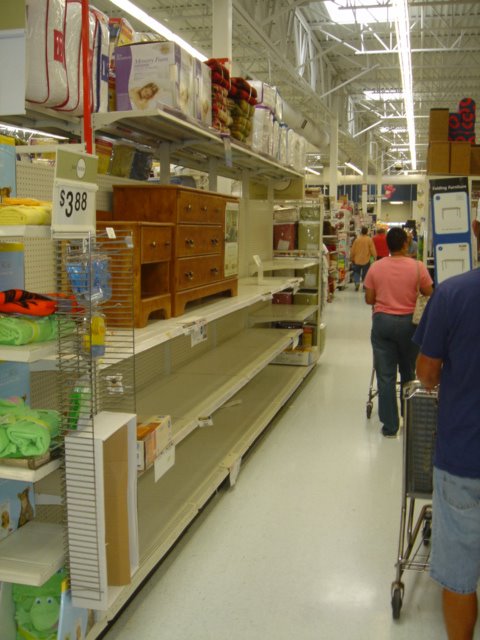
“We were closed for the first ten days after Katrina, but we finally got opened the best that we could do. We’re still not at 100%, but we’re taking care of people’s needs when they are in a bad way,” was how Chris Ortstadt, local manager at the Ocean Springs, MS Wal-Mart explained to me about his store. “We’ve had people standing in line for 30 and 45 minutes, just because we don’t have enough cash registers to take care of the volume. But, I’ve yet to have one person who has complained. They are just so thankful that we are here.”

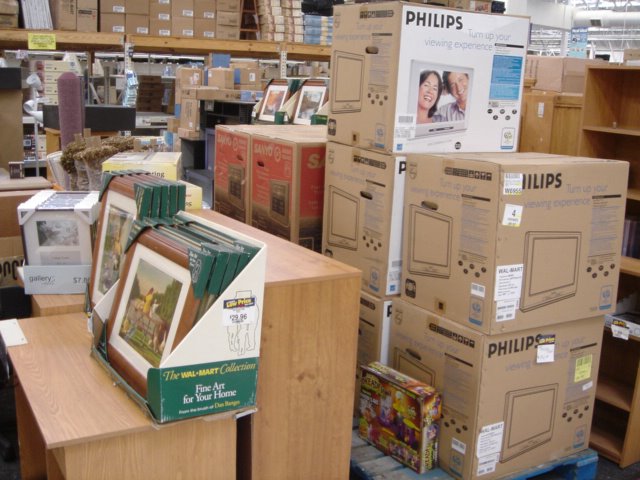
I could tell that Chris has gone thru a great deal when I visited his store. The front was still partially damaged and he was obviously having trouble keeping up with the increased volume that was flowing thru the store. There were certain departments that still had empty shelves, because of the heavy need for certain items. It was also the junkiest Wal-Mart that I’ve seen, just because of what it has been thru and continues to help take care of the local residents. I snapped a few pictures before I was asked to leave by the assistant manager, who explained that pictures weren’t allowed under their non-solicitation policy. I was there incognito without Chris showing me around. I laughingly got into a brief discussion with the assistant manager, but quickly left as I figured he had bigger problems taking care of people than he ought to have with a smart-alecky blogger.

Several of the local residents commented to me on how grateful they were for Wal-Mart and Home Depot as opposed to FEMA in getting back onto their feet. The free enterprise system seemed to work much better than the bureaucratic governmental one. Might be something to think about for the future as we as a country look at how we handle disasters in the future.

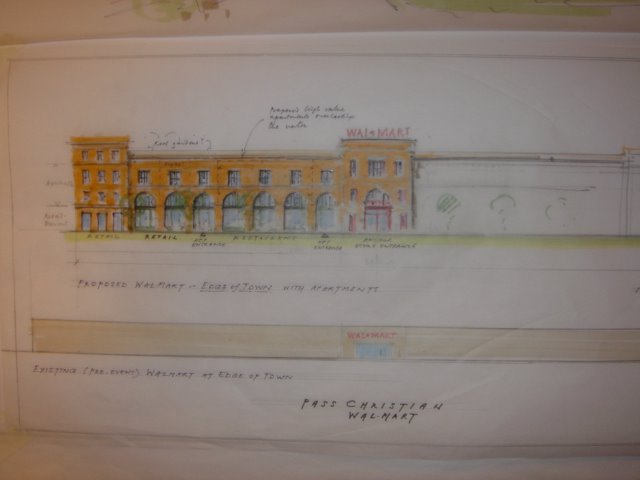
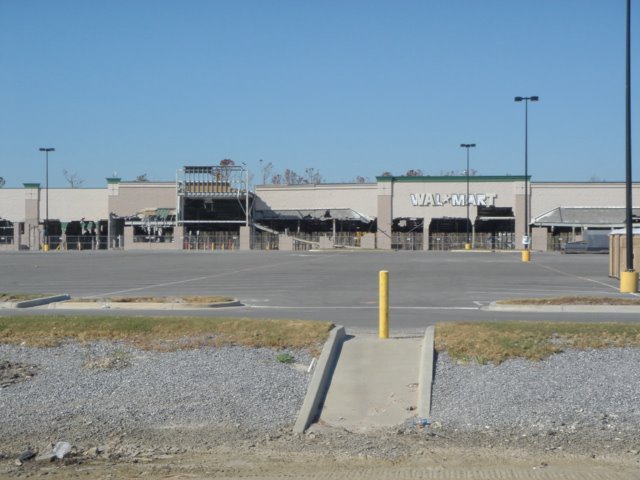
I saw two very interesting concepts for Wal-Marts on the Gulf Coast in the Charrette. Both involved turning the local Wal-Marts from asphalt islands, largely accessible only by car into walkable Town Centers. The design in Pass Christian showed other retail stores and upstairs apartments/condos at the entrance to the Wal-Mart. It was an interesting idea that I hope gets tried in Pass Christian. This particular Wal-Mart was one of only 2 structures that I still saw standing in a seven mile stretch of beach front.

Proposed Town Center Wal-Mart in Pass Christian with small shops and condos Posted by Picasa

Proposed Wal-Mart in Pass Christian, MS with small shops and condos Posted by Picasa

Remains of Wal-Mart in Pass Christian, MS Posted by Picasa

Wal-Mart Ocean Springs, MS packed checkouts Posted by Picasa

Wal-Mart Ocean Springs, MS populalar item area Posted by Picasa

Wal-Mart in Ocean Springs, MS with aisles full Posted by Picasa

Wednesday, November 02, 2005

Ocean Springs’ Vision, Not the Disney Ocean Springs

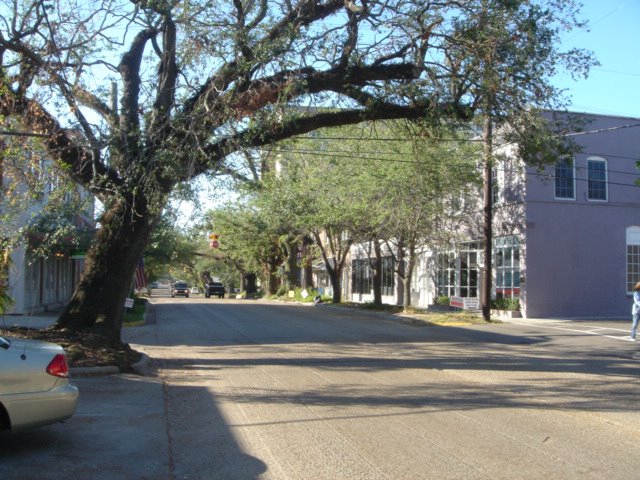
“The one thing that we heard over and over as we talked to local people was, ‘We want to be the real Ocean Springs, not the Disney Ocean Springs,” Victor Dover of Dover, Kohl and Partners, one of the team leaders at the Mississippi Gulf Coast Rebuilding Charrette, explained to the town leaders who gathered around to hear of their plans for Ocean Springs. Ocean Springs (population 17,225) is an artist’s town with a laid back tree-lined downtown, a commercial fishing harbor and a growing commercial strip on the north side of town. They voted not to allow casino gambling years ago when both Biloxi and Gulfport voted to accept it.

The team’s concept focused upon rebuilding the historical downtown commercially and in a mixed use manner; turning the fishing harbor into a more resident friendly place, developing the western approach into town from Biloxi into a ferry terminal and gateway to the town, and using the Wal-Mart on the northeast edge of town as the base for a new walkable Town Center.

Some shortcomings/opportunities that they saw in the town were only one restaurant in town that had a view of water, the bow-tie of bridges and overpasses caused by Hwy 90 and the CSX RR tracks crossing each other on the west edge of town, a 100 acre strategically located wooded piece of land owned by a lady out of NYC (need to start a dialog), and a need for a form based planning code.

The team developed some wonderful preliminary building plans, laid out a clear vision for the town and opened the eyes of what might be possible in Ocean Springs. I hope that they get implemented.

Ocean Springs plans for rebuilding taking shape Posted by Picasa

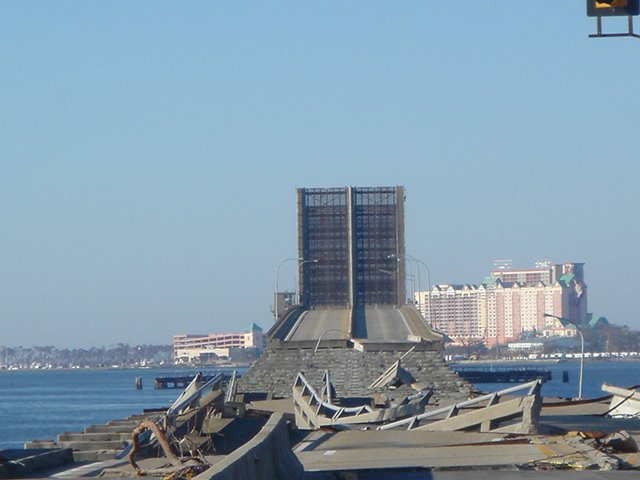
Destroyed drawbridge to Biloxi from Ocean Springs Posted by Picasa

Downtown Ocean Springs, MS Posted by Picasa

Tuesday, November 01, 2005

What if There Was No Yellow Brick Road?

“What if there hadn’t been a Yellow Brick Road?” Mark Townsend, a local farmer asked, starting off a visioning session for Blackford County, IN. “The Tin Man wouldn’t have gotten a heart. The Scarecrow wouldn’t have gotten a brain. The Lion wouldn’t have gotten courage. Dorothy would have never gotten back to Kansas. And, Toto would probably be out chasing hogs. But instead, with heart, courage and intelligence they got to the Land of Oz. If we can do the same thing we can bring life back to our community.”

Jim Dittoe of Winning Communities was conducting the sessions, something he is doing in a number of towns and invited me to give my talk to assist in helping to shape the discussions on a vision. There were some great ideas expressed, an obvious love for the community shown by many in the room and a determination to make something happen in the county.

Do you know where you are going as a community? How are you going to get there?

Jim Dittoe of Winning Communities Posted by Picasa

Blackford Co Courthouse; Hartford City, IN Posted by Picasa