“There is always a crowd at the starting line,” was one of the thoughts that Jim Dittoe of Winning Communities, www.winningcommunities.com, left with me when he stopped by to visit recently.
He also pointed out my recent posts on the resurgence in NE IN were right on point. “You need to look at the commuter patterns of Elkhart and South Bend”, which I did much to my surprise.
I would have thought that South Bend, more than twice as large as Elkhart, would have many more people driving into it. I was wrong. There are 12,920 people who make the daily trek to Elkhart (county) from South Bend (county), compared to only 4,935 who make the reverse commute.
Elkhart is a much more entrepreneurial and industrial town, whereas South Bend is much more institutional. The jobs of the future are going to be entrepreneurial.
Saturday, March 11, 2006


Friday, March 10, 2006
Gonna Be Back In OK
We just learned this week that our son James has been accepted to Oklahoma University in Norman, OK where he hopes to study Journalism. His twin son, Joseph, is going to be attending Monmouth College in Monmouth, IL to study Art and Business.
I’ve made several trips to OK over the past year, blogged on my experiences a great deal and will be back there next month for a couple of talks. It is a wonderful state with a great entrepreneurial spirit. I’m looking forward to blogging on my experiences there during my wife’s and my visits to James in OK.
I’ve made several trips to OK over the past year, blogged on my experiences a great deal and will be back there next month for a couple of talks. It is a wonderful state with a great entrepreneurial spirit. I’m looking forward to blogging on my experiences there during my wife’s and my visits to James in OK.
ED is a LT Game
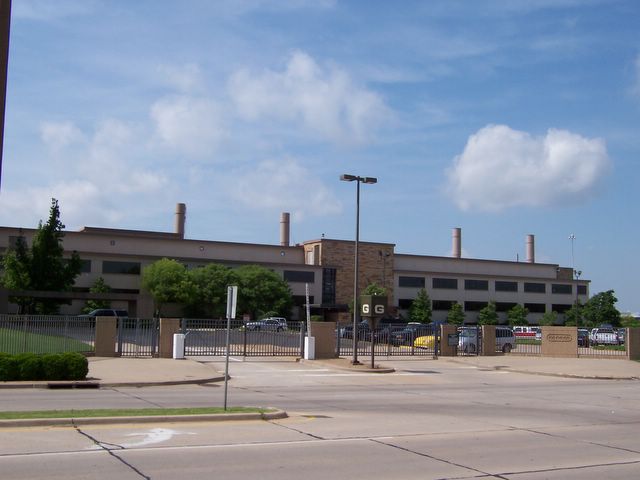
“For over 10 years we have been in discussion with the owners of the property. Not unlike football, most often economic development is a series of running plays which net a few yards. Every now and then, when the correct players are on the field and the conditions are just right, you can throw a pass that leads to a score. I think we would all agree that most of the time we see more short gains, than touchdown bombs.” Tim Burg of the Ponca City, OK Development Authority (population 25,919) was talking about a recent big announcement of the donation of a research building and $2 million from ConocoPhillips.
The gift will establish a national sensor testing center that will be run by Oklahoma State University. The project, which will employ 80 scientists, engineers and support personnel with a payroll of $13.8 million, is projected to have a $120 million impact on the region over a ten year period of time.
Ponca City has impressed me with how they have redeveloped themselves from a town largely dependent upon Conoco Oil, which was headquartered there until it merged with Phillips Petroleum in 2002. Ponca City has learned that being a divisional town is a lot different and diversification is critical for their long term success as a community.
My visits there have impressed upon me how a town can utilize its resources. In this case it’s turning an abandoned corporate building into a new direction for the town and region. ED is a long term game and those that persevere in playing the game creatively and passionately will ultimately triumph. Ponca City is such a town and the new OSU Sensor Facility is a positive step for them.
The gift will establish a national sensor testing center that will be run by Oklahoma State University. The project, which will employ 80 scientists, engineers and support personnel with a payroll of $13.8 million, is projected to have a $120 million impact on the region over a ten year period of time.
Ponca City has impressed me with how they have redeveloped themselves from a town largely dependent upon Conoco Oil, which was headquartered there until it merged with Phillips Petroleum in 2002. Ponca City has learned that being a divisional town is a lot different and diversification is critical for their long term success as a community.
My visits there have impressed upon me how a town can utilize its resources. In this case it’s turning an abandoned corporate building into a new direction for the town and region. ED is a long term game and those that persevere in playing the game creatively and passionately will ultimately triumph. Ponca City is such a town and the new OSU Sensor Facility is a positive step for them.

Thursday, March 09, 2006
Wal-Mart--Good for Downtown?
“Our sales tax revenue is on track to double this year. Most of it is due to the opening of a new Wal-Mart Supercenter last year, but we’ve seen good retail growth in various sectors of Pryor. The most interesting phenomenon is that we’ve seen the downtown area surge with the opening Wal-Mart. We’re bringing more people to town and some of them are shopping downtown.” Barbara Hawkins of the Pryor Chamber was telling me about their retail strength and growth during a recent tour of the town.
I’ve seen a few towns try to ban certain retailers or impede their development. It is a very short term strategy that might help a few established retailers for a short period of time, but results in stagnation and unintended consequences in the long term. Towns need to be focused upon the long term, doing what they can to enhance their communities.
I’ve seen a few towns try to ban certain retailers or impede their development. It is a very short term strategy that might help a few established retailers for a short period of time, but results in stagnation and unintended consequences in the long term. Towns need to be focused upon the long term, doing what they can to enhance their communities.
Almost Thrown in Jail
WARNING: This is another of Jack’s personal travel rants. It doesn’t have anything to do with Economic Development, Main Streets, or agurbs®. Please skip to next post unless you wish to hear another one of his miserable travel mishaps.
I ran to the gate with 5 minutes to spare for my connecting flight back home from SC. Ms. Meazu Hailes (badge no. 130580) of United Express blocked my way, “The flight is closed and you can’t get on.”
“But the door is still open and the stairs are still down. Besides it says that the flight doesn’t leave for another 5 minutes.” Someone came in from the plane and said that I could still get on, but, there was no convincing Ms. Hailes. So I pulled out my camera to take a picture of the plane with its steps down, which really set her off.
“You are not allowed to take pictures of the plane. Give me that camera!”
Huh??? Am I in the old Soviet Union? This is a camera, not a gun!
I probably shouldn’t have continued to try to take a picture, but then this wouldn’t be on my blog today. She started blocking my view of the plane and as I raised my camera above her head to take the picture, she jumped up and knocked my camera to the floor, breaking it into several pieces. This was a very aggressive gate attendant! Great on security, but not much on customer service!
When she wouldn’t give me her name, hiding her name badge, I asked to talk with her supervisor and also security. A supervisor was there quickly and took me to their customer service area where I was handed off to another supervisor, Mr. Jeremy Flores. He called for Ms. Hailes to explain her side of the story. After listening to both of us, he told me to “go pound sand” in so many words, so I asked him to call security to file a complaint. That turned out to be my second mistake of the day.
The union steward huddled with Ms. Hailes as Officer Moore talked with me separately. After talking with her, he informed me, “You are on private property leased to United and you shouldn’t have tried to take those pictures. You can’t file anything against her, but if she wants to file an assault charge against you I’ll have to book you.”
“WHAT???? She broke my camera!” was running thru my mind but I decided that retreat was the best option open at the moment. After a few anxious minutes while he conferred with her and the union steward, he returned to let me know that “she isn’t going to file charges but you are going to be blacklisted from ever flying on United Express again.”
“Let me see if I’ve got this right. I missed my plane even though the door is open. I try to take a picture. My camera is knocked to the floor and broken. And, I just avoided time with Bubba in a jail cell and now can’t fly? Is this a bad dream?” Also, not spoken out loud or it would have been my third bad mistake of the day.
I left the United Express terminal and went to the United terminal where I talked with the Customer Service people about my situation. Mr. Stephen G. Price, a supervisor there, calmed me down and explained to me that I had been had and that there isn’t anyway to blacklist someone. He also told me that there was no way they would book a passenger for trying to take a picture. And, United Express could have left me on the plane with my boarding pass and taken care of the paperwork after the plane left the gate.
Well, they sure had this country boy fooled! Another in my continuing rants about the frustrations of traveling on the hub and spoke airline system. Other than a misstep here and there, I’m still having a ball seeing rural America. It will take something worse than a Ms. Hailes or Officer Moore to keep me down.
I ran to the gate with 5 minutes to spare for my connecting flight back home from SC. Ms. Meazu Hailes (badge no. 130580) of United Express blocked my way, “The flight is closed and you can’t get on.”
“But the door is still open and the stairs are still down. Besides it says that the flight doesn’t leave for another 5 minutes.” Someone came in from the plane and said that I could still get on, but, there was no convincing Ms. Hailes. So I pulled out my camera to take a picture of the plane with its steps down, which really set her off.
“You are not allowed to take pictures of the plane. Give me that camera!”
Huh??? Am I in the old Soviet Union? This is a camera, not a gun!
I probably shouldn’t have continued to try to take a picture, but then this wouldn’t be on my blog today. She started blocking my view of the plane and as I raised my camera above her head to take the picture, she jumped up and knocked my camera to the floor, breaking it into several pieces. This was a very aggressive gate attendant! Great on security, but not much on customer service!
When she wouldn’t give me her name, hiding her name badge, I asked to talk with her supervisor and also security. A supervisor was there quickly and took me to their customer service area where I was handed off to another supervisor, Mr. Jeremy Flores. He called for Ms. Hailes to explain her side of the story. After listening to both of us, he told me to “go pound sand” in so many words, so I asked him to call security to file a complaint. That turned out to be my second mistake of the day.
The union steward huddled with Ms. Hailes as Officer Moore talked with me separately. After talking with her, he informed me, “You are on private property leased to United and you shouldn’t have tried to take those pictures. You can’t file anything against her, but if she wants to file an assault charge against you I’ll have to book you.”
“WHAT???? She broke my camera!” was running thru my mind but I decided that retreat was the best option open at the moment. After a few anxious minutes while he conferred with her and the union steward, he returned to let me know that “she isn’t going to file charges but you are going to be blacklisted from ever flying on United Express again.”
“Let me see if I’ve got this right. I missed my plane even though the door is open. I try to take a picture. My camera is knocked to the floor and broken. And, I just avoided time with Bubba in a jail cell and now can’t fly? Is this a bad dream?” Also, not spoken out loud or it would have been my third bad mistake of the day.
I left the United Express terminal and went to the United terminal where I talked with the Customer Service people about my situation. Mr. Stephen G. Price, a supervisor there, calmed me down and explained to me that I had been had and that there isn’t anyway to blacklist someone. He also told me that there was no way they would book a passenger for trying to take a picture. And, United Express could have left me on the plane with my boarding pass and taken care of the paperwork after the plane left the gate.
Well, they sure had this country boy fooled! Another in my continuing rants about the frustrations of traveling on the hub and spoke airline system. Other than a misstep here and there, I’m still having a ball seeing rural America. It will take something worse than a Ms. Hailes or Officer Moore to keep me down.
Wednesday, March 08, 2006
Largest Rural Industrial Park in the USA
“During WWII we had over 10,000 people living in tents just outside of town when the U. S. Government built a smokeless black powder plant that was run by DuPont. They closed it down after the war and in the 1960s were going to dismantle it.” Barbara Hawkins of the Pryor Chamber was explaining to me the history of the 9,000 acre MidAmerica Industrial Park. “Gene Redden, who was a GSA employee, was sent here to tear it all down, but he saw the potential for the town and the region and was able to set up a state trust to own and operate this as the country’s largest rural industrial park.”
The park has its own airport with a 5,500 ft. runway, a 20,000 sf expo center, business incubator run by OSU and over 70 businesses located on its grounds. Sanders Mitchell has run the park ever since Gene Redden suddenly died. He explained some of the other attributes of the park, which is actually more of a small city, “We have our own water plant which has a capacity of 62 million gallons/day. We sell about 28 million gallons per day to local industries and surrounding towns. We also have our own waste treatment plant. We are totally self funding as a public trust and don’t get any help from local or state sources.”
The recession of 2001 was hard on the park, which lost about 2,000 of the 5,100 employees that worked there in 2000. However, since then employment has rebounded to over 4,000 today and several industries are in the process of adding employees.
OK has impressed me with steps they’ve taken in the past several years to make themselves more business friendly and I believe that they are on the cusp of some major job generation. The MidAmerica Industrial Park is one of two Auto Mega-Sites for the State of OK, but I hope that they choose the other site. Having an 800 pound gorilla like and auto company in a town the size of Pryor would be a major economic boost in the short term, but as the auto industrial surges and ebbs perhaps not so good in the long term. I like their current strategy of having a number of smaller, more nimble companies. It gives them a much steadier economic base for the future.
The park has its own airport with a 5,500 ft. runway, a 20,000 sf expo center, business incubator run by OSU and over 70 businesses located on its grounds. Sanders Mitchell has run the park ever since Gene Redden suddenly died. He explained some of the other attributes of the park, which is actually more of a small city, “We have our own water plant which has a capacity of 62 million gallons/day. We sell about 28 million gallons per day to local industries and surrounding towns. We also have our own waste treatment plant. We are totally self funding as a public trust and don’t get any help from local or state sources.”
The recession of 2001 was hard on the park, which lost about 2,000 of the 5,100 employees that worked there in 2000. However, since then employment has rebounded to over 4,000 today and several industries are in the process of adding employees.
OK has impressed me with steps they’ve taken in the past several years to make themselves more business friendly and I believe that they are on the cusp of some major job generation. The MidAmerica Industrial Park is one of two Auto Mega-Sites for the State of OK, but I hope that they choose the other site. Having an 800 pound gorilla like and auto company in a town the size of Pryor would be a major economic boost in the short term, but as the auto industrial surges and ebbs perhaps not so good in the long term. I like their current strategy of having a number of smaller, more nimble companies. It gives them a much steadier economic base for the future.
Tuesday, March 07, 2006
Quality of Life USA
I don’t believe that I’ve seen a town do so many quality of life projects in such a short period of time, as what I saw last week in Pryor, OK (population 8,659), one of the agurbs® that I chose for inclusion in BoomtownUSA. It is these quality of life enhancements that are going to be the key differentiators that will determine which towns will set themselves apart to bring in new residents, entrepreneurs and businesses. Pryor is doing just that!
“We are less than 50 miles away from over 2,500 miles of shoreline and located in the foothills of the Ozark Hills,” was how Barbara Hawkins, head of the Pryor Chamber started our tour. “We had a local resident who came back to take care of his mother, who redid the local theater, buying a neighboring building and turning it into a five-plex. As a result a new restaurant started up in the downtown area.”
But Barbara was only warming up in the downtown. She told me of Camp Dry Gulch, which brings in over 10,000 summer campers and has developed a Christmas theme park six miles north of town. We also visited Country Fever Fest’s (www.countryfeverfest.com) new 400 acre outdoor festival and camping grounds. They do an annual four-day country music festival, two two-day rodeos, a Christian music festival and plans for a rock festival in 2007. They are bringing in 12,000 per day for these events.
Our last stop was the brand new Pryor Creek Recreation Center, a 51,000 sf, $6 million facility funded overwhelmingly with a bond referendum by the citizens of Pryor. The facility includes a zero-degree entry fitness pool with lap lanes and diving board; weight room; full court gymnasium; indoor track; community area; and a Boys and Girls Club.
It was hard to believe that I’d seen all of this in a town of 8,600. As I drove out of town, I knew that I’d made a good choice in naming them an agurb®.
“We are less than 50 miles away from over 2,500 miles of shoreline and located in the foothills of the Ozark Hills,” was how Barbara Hawkins, head of the Pryor Chamber started our tour. “We had a local resident who came back to take care of his mother, who redid the local theater, buying a neighboring building and turning it into a five-plex. As a result a new restaurant started up in the downtown area.”
But Barbara was only warming up in the downtown. She told me of Camp Dry Gulch, which brings in over 10,000 summer campers and has developed a Christmas theme park six miles north of town. We also visited Country Fever Fest’s (www.countryfeverfest.com) new 400 acre outdoor festival and camping grounds. They do an annual four-day country music festival, two two-day rodeos, a Christian music festival and plans for a rock festival in 2007. They are bringing in 12,000 per day for these events.
Our last stop was the brand new Pryor Creek Recreation Center, a 51,000 sf, $6 million facility funded overwhelmingly with a bond referendum by the citizens of Pryor. The facility includes a zero-degree entry fitness pool with lap lanes and diving board; weight room; full court gymnasium; indoor track; community area; and a Boys and Girls Club.
It was hard to believe that I’d seen all of this in a town of 8,600. As I drove out of town, I knew that I’d made a good choice in naming them an agurb®.

Monday, March 06, 2006
Entrepreneurial Oklahoma
Meeting entrepreneurs and prospective entrepreneurs is one of the highlights of my touring the USA. Their enthusiasm and often inspirational stories are very uplifting. I was at the Rogers County Entrepreneur Day in Claremore, OK (population 15,873). Rogers County, the fastest growing county in the state, was named for Clem V. Rogers, member of the OK Constitutional Convention and father of famed Will Rogers. Rogers was born in the county and his burial site and museum in Claremore is a major tourist draw. Several entrepreneurs were honored at the event.
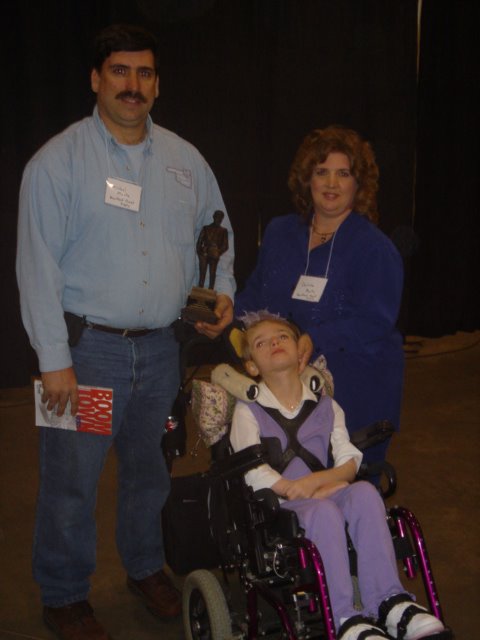
Michael & Delinda Martin started Heartland Florist Supply in 2001 in Inola, OK (population 1,589) as a way to be able to take care of their disabled child, Danielle. The company sources floral supplies worldwide, servicing floral shops in a four state area with over a dozen employees.
David Allen and Scott Williams both work for American Airlines in Tulsa as mechanics but dreamed of starting their own business. One year ago in March, 2005 they started Green Country Bio Diesel which is currently producing 750,000 gallons of vegetable oil bio-product with plans to boost production to 2.5 million gallons.
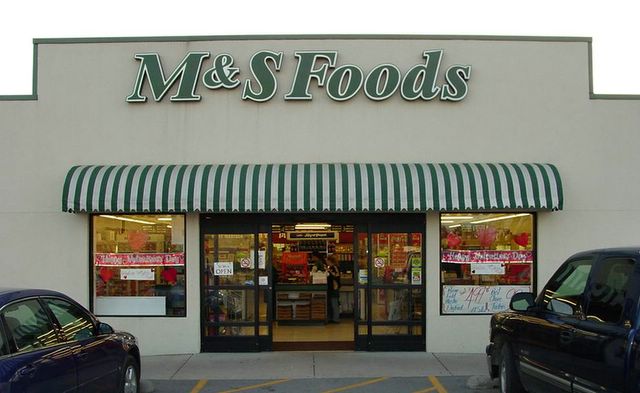
M&S Foods started a new grocery story in Inola in 2003, allowing local residents the convenience of shopping locally. Who starts a grocery store today? Only a dedicated local entrepreneur.
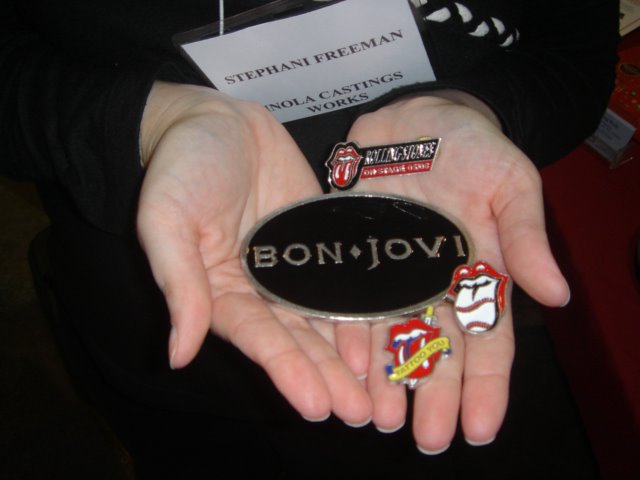
I also was intrigued by one of the exhibitors at the event, Inola Castings (www.inolacastings.com). Do you notice a trend here? Three entrepreneurial companies that caught my eye, all from a town of 1,589! What is in the water there?
“Dad started the company in 1990. He was a traveling salesman but always dreamed of starting something on his own. He found someone who used a lot of small casting products and got them to back him. Today my sister Cheryl Charles, my brother David Freeman and I run the business. My sister is also mayor of the town.” I was talking with Stephani Freeman, one of the three siblings. She showed me products they had done for Bon Jovi, The Rolling Stones and other well known groups, companies and organizations.
There is a growing movement of entrepreneurism in this country. Keep your eye on it because it is going to transform the country.
Michael & Delinda Martin started Heartland Florist Supply in 2001 in Inola, OK (population 1,589) as a way to be able to take care of their disabled child, Danielle. The company sources floral supplies worldwide, servicing floral shops in a four state area with over a dozen employees.
David Allen and Scott Williams both work for American Airlines in Tulsa as mechanics but dreamed of starting their own business. One year ago in March, 2005 they started Green Country Bio Diesel which is currently producing 750,000 gallons of vegetable oil bio-product with plans to boost production to 2.5 million gallons.
M&S Foods started a new grocery story in Inola in 2003, allowing local residents the convenience of shopping locally. Who starts a grocery store today? Only a dedicated local entrepreneur.
I also was intrigued by one of the exhibitors at the event, Inola Castings (www.inolacastings.com). Do you notice a trend here? Three entrepreneurial companies that caught my eye, all from a town of 1,589! What is in the water there?
“Dad started the company in 1990. He was a traveling salesman but always dreamed of starting something on his own. He found someone who used a lot of small casting products and got them to back him. Today my sister Cheryl Charles, my brother David Freeman and I run the business. My sister is also mayor of the town.” I was talking with Stephani Freeman, one of the three siblings. She showed me products they had done for Bon Jovi, The Rolling Stones and other well known groups, companies and organizations.
There is a growing movement of entrepreneurism in this country. Keep your eye on it because it is going to transform the country.



Sunday, March 05, 2006
Educational Productivity?
“For the past 10 years, one of the secrets to the growth of the U.S. economy has been the dramatic improvement in productivity. ‘Doing more with less’ has been the mantra for manufacturing, the service industry and most other sectors,” was the opening statement from the president of the St. Louis Fed, William Poole, in his monthly comment. He related how productivity in the past ten years has grown at twice the rate of the previous 20. In my opinion, one of the keys to our continuing international domination lies in the productivity area.
“One sector has yet to get on the bandwagon: higher education. The cost of tuition over the past two decades has risen even faster than the cost of medical care. The burden on many families and students has reached the breaking point. And there is no relief in sight.” Poole pointed out that instructional expenditures per student at public institutions rose 17% during the 1990s, while administrative expenditures jumped 54%.
His suggestions on what colleges and universities might do to copy the successes of the U. S. economy?
1. Outsource: What business are you in? If it’s not directly related to education (i.e. housing, food service, cleaning, etc.) contract it out. “Competition from outside contractors would drive down costs.”
2. Decentralize: Push decisions and money down to the department heads.
3. Improve the product: Teaching should be prime, not secondary to research.
4. Boost flexibility of the workforce: With an ever changing demand for classes, there is a need to be able to move professors around, increasing their time in the classroom or even lay them off. Lifetime tenure makes such flexibility virtually impossible. “A department could be allowed to exceed its tenure quota if it’s willing to give up something when that extra person’s classes fall out of favor—say, a portion of everyone else’s salary.
What do you think about his ideas?
“One sector has yet to get on the bandwagon: higher education. The cost of tuition over the past two decades has risen even faster than the cost of medical care. The burden on many families and students has reached the breaking point. And there is no relief in sight.” Poole pointed out that instructional expenditures per student at public institutions rose 17% during the 1990s, while administrative expenditures jumped 54%.
His suggestions on what colleges and universities might do to copy the successes of the U. S. economy?
1. Outsource: What business are you in? If it’s not directly related to education (i.e. housing, food service, cleaning, etc.) contract it out. “Competition from outside contractors would drive down costs.”
2. Decentralize: Push decisions and money down to the department heads.
3. Improve the product: Teaching should be prime, not secondary to research.
4. Boost flexibility of the workforce: With an ever changing demand for classes, there is a need to be able to move professors around, increasing their time in the classroom or even lay them off. Lifetime tenure makes such flexibility virtually impossible. “A department could be allowed to exceed its tenure quota if it’s willing to give up something when that extra person’s classes fall out of favor—say, a portion of everyone else’s salary.
What do you think about his ideas?
Saturday, March 04, 2006
Lessons Learned From Site Visits
Todd Thoman, our ace ED person at Agracel, returned from a Norfolk Southern ED Conference where Randy Broome from Duke Power shared his top 10 lessons learned from doing numerous site visits over the years. I’ve encountered my share of these same problems over the years and thought that you would enjoy them also. Here they are:
10. Some “sites” aren’t really sites.
9. It is not good form for the local developer to get lost on their way to the site.
8. It is not good form for the local developer to run out of gas on their way to the site.
7. The number of major bumps in the access road is directly proportional to how fast the local developer drives.
6. Site consultants don’t give a damn about “the oldest barber shop” or “the first hydrant” in the county.
5. Site consultants DO care about “the best barbeque restaurant” in a community—EVERY time!
4. Helicopters are fun (for awhile); and they don’t need doors!
3. If a gas or water utility rep doesn’t know the answer, the answer is always “It won’t be a problem!”
2. If a site ain’t got no deer stand, it ain’t no site
1. Them big hills is why God made Caterpillar
10. Some “sites” aren’t really sites.
9. It is not good form for the local developer to get lost on their way to the site.
8. It is not good form for the local developer to run out of gas on their way to the site.
7. The number of major bumps in the access road is directly proportional to how fast the local developer drives.
6. Site consultants don’t give a damn about “the oldest barber shop” or “the first hydrant” in the county.
5. Site consultants DO care about “the best barbeque restaurant” in a community—EVERY time!
4. Helicopters are fun (for awhile); and they don’t need doors!
3. If a gas or water utility rep doesn’t know the answer, the answer is always “It won’t be a problem!”
2. If a site ain’t got no deer stand, it ain’t no site
1. Them big hills is why God made Caterpillar
Friday, March 03, 2006

Subscribe to:
Posts (Atom)


 Posts
Posts

