Thursday, October 20, 2005


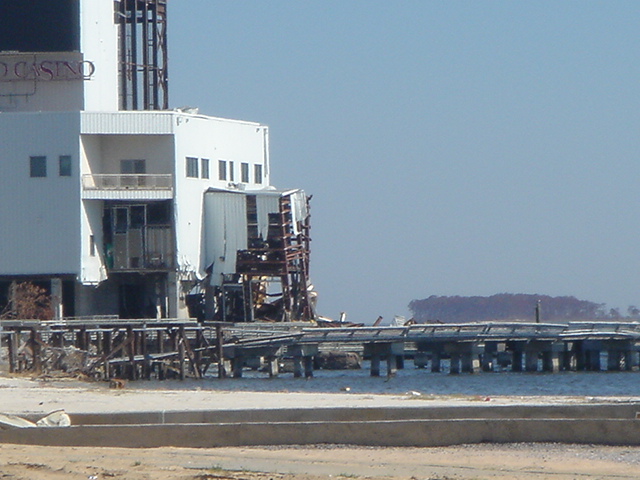
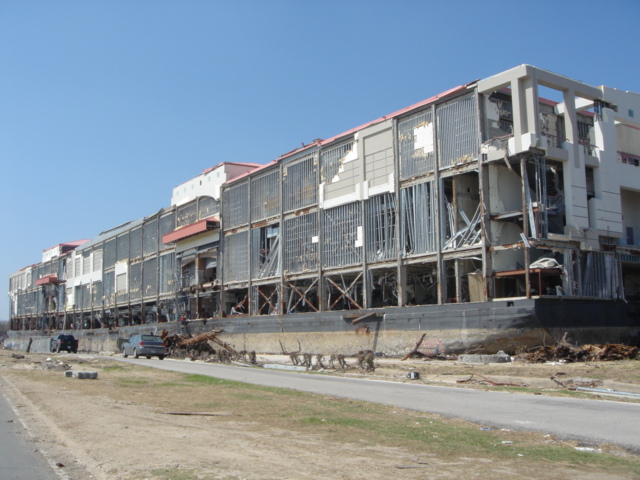
Grand Casino, bigger than a football field, ends up on dry land over 1000 feet from its moorings Posted by Picasa

Where Grand Casino Started Storm and was lifted up and over the pilings without damaging the pilings Posted by Picasa

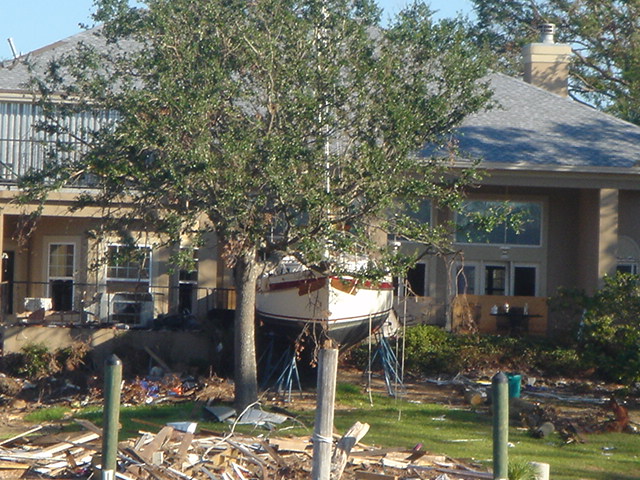
Sailboat in Living Room in Ocean Springs, MS Posted by Picasa

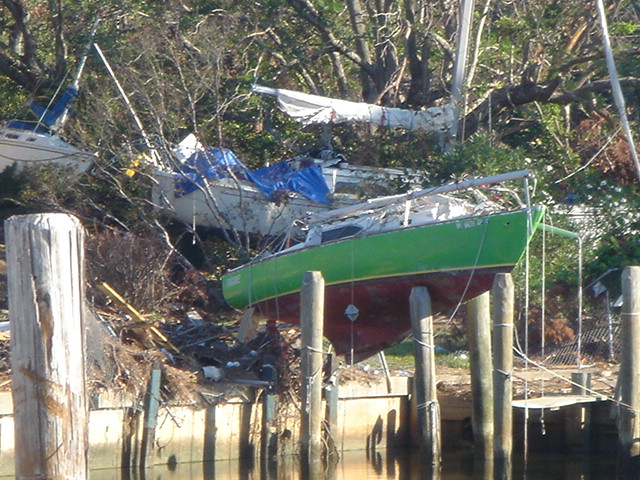
Ocean Springs, MS Posted by Picasa

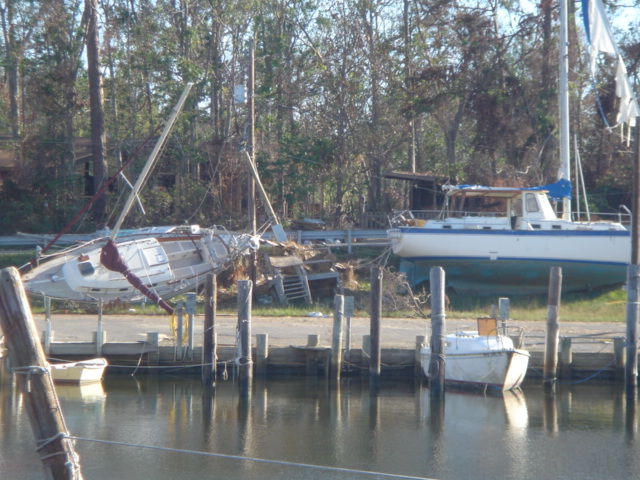
Boats in Ocean Springs, MS Posted by Picasa

Totally Fiber Optic

In my opinion, broadband connectivity is as important to a town as water, sewer and electrical service. In the early 1900s, I’m sure that there were towns that didn’t see the importance of utilities like water, sewer and electricity for industrial development. “We’ll get it someday,” might have been their attitude. My guess is that they were passed by and eventually whittled away to practically nothing. That same attitude is prevalent in some of the towns that I visit when they talk about broadband connectivity. I see it differently. Today it is as important as other city services and is becoming even more important with each passing day.

Columbus, KS (population 3,396) is fortunate to have Columbus Telephone, a member owned cooperative, headquartered in the town. Jim Dahmen of Columbus Telephone told me, “With the fiber optic network, we are now able to offer every member broadband connectivity for voice, video and data. By burying the entire plant, we have also increased our network reliability by not being exposed to all types of weather situations.”

Columbus hit my radar screen last year when we used a Columbus based company to do a construction project for us. I found it to be a very entrepreneurial town. Jim told me, “We presently have a number of downtown properties available. In addition, we have 187,178 sf and a 20,000 sf plants available.” If you are an entrepreneur, you might want to check them out.

Columbus, KS Billboard Posted by Picasa

Wednesday, October 19, 2005

Rumor Mill Killer

One of the most frustrating subjects that often comes up when I talk with city leaders is the constant coffee-shop rumor mill and how devastating it can be to a town. Larry Paine, City Manager for Concordia, KS (population 5,714) has a couple of innovative ways that he tries to counter this often-negative coffee-shop chatter.

He has a blog (http://concordiacityhall.blogspot.com/) which keeps citizens informed about what is happening in the town. Recently he has been trying to hire a police chief, a frustrating experience for him. His blog relates the steps that he has gone thru and progress that he has made to date.

Concordia also has a “Tuesday Morning Coffee” for local citizens and chamber members. Larry told me, “It is designed to inform everyone about the week’s activities. It is a rumor-mill killer. Anyone can ask anything.”

An initiative that he started in the spring of 2004 at the Tuesday Morning Coffee has grown into what locals call the “Larry Paine Sign of Life List”. He has compiled a list of entrepreneurial companies that have grown in the past five years. Today he has 90 companies listed that fit his criteria of “starting a new business, expanded, built new, and those that purchased a business. We’ve found that a community that produces business growth like that is not dying.”

Some great ideas from Kansas! Try them in your town.

Tipping Point to Small Towns

Ernst & Young, one of the big four accounting firms, is closing its Little Rock, AR office to open one in Rogers, AR (population 38,829). I see this as one of the first signs of the “tipping point” of movement from old, big cities to newer, more vibrant ones like Rogers.

Little Rock is the state capitol and has been the economic center for the state since its founding. However, the balance of power in the state has slowly but relentlessly been shifting to northwest Arkansas for the past twenty years. Entrepreneurs like Sam Walton, J. B. Hunt, Don Tyson and others created an economic powerhouse there and the shift to the NW is becoming more rapid.

E&Y’s move is just another indication of the power of entrepreneurial towns like Rogers surpassing the more bureaucratic ones like Little Rock.

Need for Regional Approach on Gulf Coast

Regionalism was one of the sixteen focus areas of the Charrette. Each of the eleven towns had a specific team and other general topics were architecture; coding; transportation and environmental.

George Schlogel, President and CEO of Hancock Bank, a locally headquartered $5 billion bank with 105 branches in four states, told me, “With our individual towns it is tough for us to think beyond our picket fences. This event has really brought people together, working toward a common goal.”

His love for the Gulf Coast was quickly evident in my talk with him. He was born and raised here and summed up his feelings about it, “It is a fine place to make a living, but a wonderful place to make a life.”

George talked about how infrastructure and access to capital are some of the first priorities that need to be worked on in the region. “We had been looking at regional issues prior to the storm, but Katrina has brought our need for more regionalism into focus. We’ve got to take this regional approach if we are to remain connected. We have to remember that the roads don’t stop at our town boundaries.”

He clicked off a number of areas of commonality between communities that could be regionalized, “We duplicate a lot of services in each town. Some that could be regionalized are the fire department, wastewater, water service. Police is probably too controversial.”

Leland Speed, head of the Mississippi Development Authority, talked about regional approaches to economic development with me, “The Stennis International Airport Business & Technology Park is a wonderful example of our approach to regional economic development. Stennis has 37 entities that are involved in its success. Moss Point is looking at doing something very similar on the east end of the Gulf Coast in a joint project with Grumman.”

I saw an incredible amount of sharing and commonality of interests at the Charrette. If that spirit continues on the Gulf Coast, you are going to see what can happen when a region looks at itself as a whole rather than in pieces.

George Schloegel, CEO & President of Hancock Bank Posted by Picasa

Tuesday, October 18, 2005

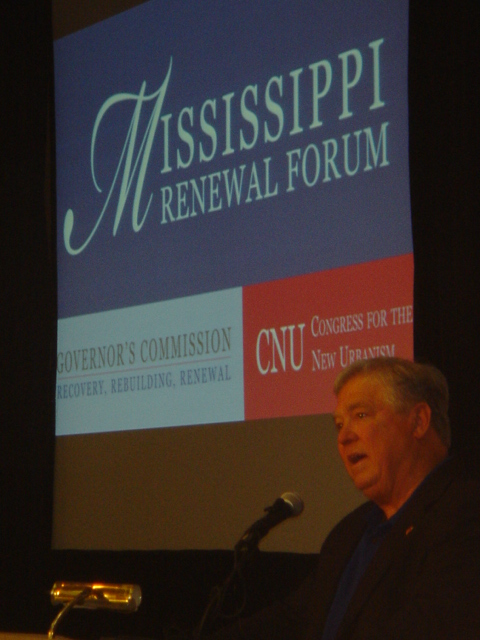
The Charrette—Or Mississippi Renewal Forum

“It is unprecedented in its size. It’s ten times larger than any such planning exercise every attempted,” was how Jim Barksdale, Mississippi native, former Netscape CEO and Chairman of the Mississippi Renewal Forum (www.mississippirenewal.com)
characterized the one week Charrette that I participated in this week.

A Charrette is an intensive, creative work session that involves professionals along with public workshops and open houses. It is a collaborative planning process that harnesses the talents and energies of the many interested parties to create and support a feasible plan for transformative community change.

And with Hurricane Katrina having “wiped the slate clean” for many of the Gulf towns, this event pulled together many diverse people in a positive way. Governor Haley Barbour led off the Charrette mentioning that Mississippi had gone thru four major catastrophes in its history: The Civil War, The 1927 Flood, Hurricane Camille in 1969 and this year’s Hurricane Katrina. In the first two events, little help came from the rest of the country and Hurricane Camille only resulted in “Business as usual. There were building service stations on the beach two months later. This is our fourth chance, and I’m determined that we are not going to miss that chance.”

Renowned architect and planner Andres Duany of Miami led the Charrette. Everyone came with their own ideas and several were initially leery of how it would all work out. But by the end of the weeklong process, I believe that most if not all were impressed with what was accomplished.

One of the first items that quickly came to the fore, was the nearly universal dislike for all of the 11 Gulf towns for the CSX RR which ran lengthwise along the entire coast thru every town, usually about a quarter of a mile from the beach. Virtually all of the rail crossings are at grade and the constant freight trains thru the towns were a major complaint. Even though CSX had already started rebuilding its line, including the reconstruction of two major bridges, as Chester “Rick” Chellman of TND Engineering said, “There were some very high level discussions that got CSX to stop their reconstruction that was starting at Bay St. Louis and moving east.” That rail line will probably become a light commuter rail, trolley line, bike path, or arterial roadway. Or some combination of those items.

The Charrette was a chance for a clean slate to be looked at and for dreams to be shared. Susan Lunardini summed it up best for me, “This Charrette has been a wonderful experience. We have teams from all over the country, the state and from every town on the Gulf Coast interacting with each other. We will build something magnificent that will be livable, walk able and attractive.”
Governor Haley Barbour Posted by Picasa

Andres Duany talking with Jim Bardsdale (in tennis shoes and hat) Posted by Picasa

From Cow Chips to Computer Chips

When you are home to the “World’s Oldest Continuous Rodeo” and were the stomping grounds of the legendary Western author, Zane Grey, your brand is probably more closely attached to cow chips rather than computer chips. But, Payson, AZ (population 13, 620), located 90 miles NE of Phoenix has moved from being a hick town to one that has embraced technology. And, many of the new companies are entrepreneurial ones that are homegrown.

Precision Intracast, Inc., an orthotics laboratory and manufacturing operation moved from high cost CA to Payson. The president of the company, Paul Rasmussen said, “Our business could have gone most anywhere. We came to Payson because it offered the ideal lifestyle for our family and our employees.” His response is one that I’m hearing repeatedly as I see more families and companies moving out of the rat race of bigger cities to places like Payson.

Other recent additions to Payson are: ILSC, a manufacturer of avionic digital processors; TGen, a bio-superstar: G-CRT, a company focused on the global transition to sustainable economies and ecosystems.

Economic Developer Scott Flake told me, “We are utilizing the “economic gardening” method of economic development along with the “hunt and kill” approach.”

I love that western terminology toward ED!

Monday, October 17, 2005

Get Email Updates of BoomtownUSA Blog

If you enjoy reading these blogs, as much as I enjoy writing them, you can get a daily email update of my blogs by putting your email address into the box on the right. It is just above the Subscribe box, powered by Bloglet. You’ll get an update of the first sentence of the blog and a link to click on, to get to the blog. We have quite a few who are already subscribed.

We also offer a weekly ezine that is a tip, story or summary of our ongoing research. If you’d like to get onto that email list, drop me an email at jschultz@agracel.com.

Rockaway Beach—What Could Have Been

“When we moved here nine years ago, it reminded us of Daytona Beach Shores, Florida,” Joe Szabo told me as he took me of a tour of Rockaway Beach, MO (population 537). “We were the first resort town built west of the Mississippi River. We were named for Rockaway Beach, NY.”

Joe and his wife Carol (who was elected Chamber president when I was there) own and run Kerrs Kountry Kabins (http://kerrskountrykabins.com). They have eleven 50s style cabins that they rent from $40 to $99/night. The $99 cabin sleeps 10 and has a full kitchen. They are also trying to lead an effort to lift up this vintage town, creating more opportunities than there are today. I loved their enthusiasm!

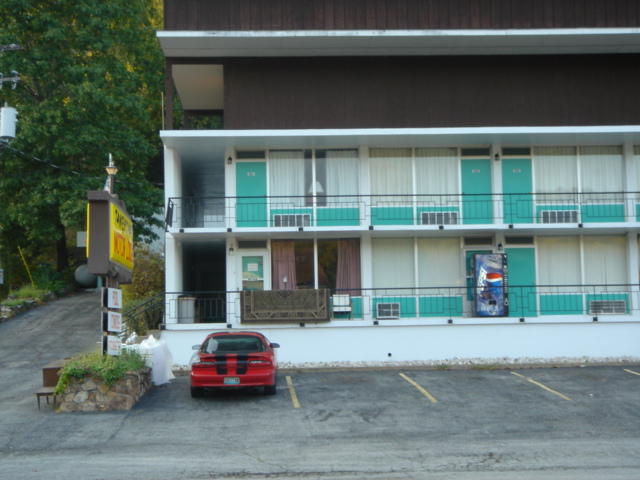
Branson is 11 miles away by road and 5 miles by boat on Lake Taneycomo, but it is light years away in mindset. It doesn’t look like much new has been built since the 50s, except for a condo complex and an occasional house. Virtually all of the retail space in the town is vacant. A few bars and restaurants are hanging on.

Roberta Mesenbrink, who moved back here nine years ago after retiring from education in SC, told me, “I grew up north and east of here. I remember coming down here as a child. This was a booming place where you could only buy property if someone died. Our biggest problem today is that we don’t think that we need anyone to tell us what to do. The town fathers feel like we can do everything ourselves.”

How did a town that was light years ahead of Branson, that hosted Harry Truman and Al Capone, that got Bob Barker started in entertainment lose its way? Is there hope for them?

I counseled them to work with Branson on promoting the town. There seems to be a lot of jealousy of Branson’s success, something that Rockaway Beach needs to get past. They’ve got a potential to sell themselves as “Branson of the 50s”, hopefully convincing a small percentage of the 7 million Branson tourists to pay them a visit.

Rockaway Beach also has potential with its proximity to the new Branson Landing. It is the closest town by boat from this new $420 million development and if I were them, I’d develop a shuttle boat system to bring visitors the five miles to Rockaway Beach.

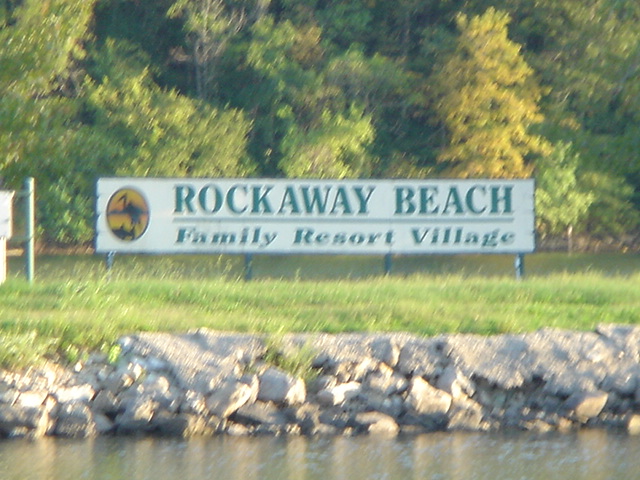
Rockaway Beach,MO Posted by Picasa

Newest Hotel in Rockaway Beach, MO Posted by Picasa

Rockaway Beach Condos Posted by Picasa