Sunday, December 11, 2005


The Seven Runners Posted by Picasa

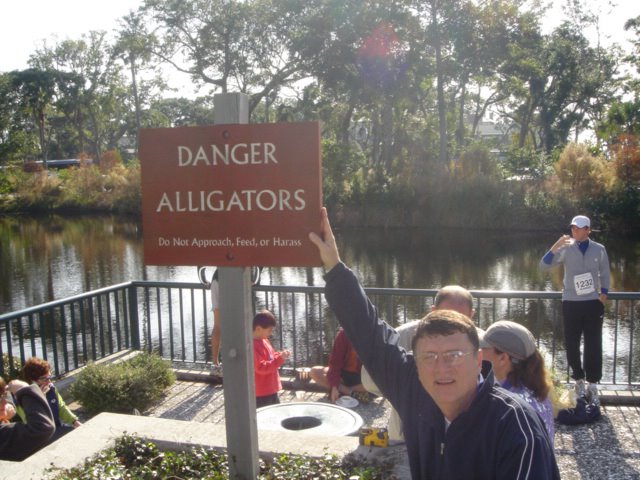
They didn't tell us of these until after the race Posted by Picasa

Saturday, December 10, 2005

Running in SC

I’m not sure that I can run 13 miles. I’ve never done it before. But, I’m going to try it this morning. In on Kiawah Island, SC for my sister Mary’s 50th birthday party. Mary is a runner and talked six of her siblings and friends to join her on a half marathon race.

I have a couple of goals for this race that I wanted to share with you prior to the race:
1. Finish the 13 miles
2. Beat my brother Bob, 12 years my junior
3. Beat the Kenyans

The third goal might seem a little lofty, but you have to realize that the Kenyans will be running 26 miles to my 13 miles. Stay tuned for the results.

Friday, December 09, 2005

Native American VC

Native American Capital (www.nativeamericancapital.com) is the first All Indian Country private equity and venture capital firm in the USA. The WA based firm plans to raise $10 million from wealthy tribes before approaching institutional investors for an additional $40 million. The plan is to invest from $1 to $3 million in Native American enterprises in established markets such as gaming, governmental contractors, federally funded housing, health care and natural resource extraction on Indian lands.

One of the major trends that I’ve observed in my travels of the past year is the dramatic increase in the number of Native American entrepreneurs. It is a largely untapped market that has tremendous long-term potential. NAC will be the first of many such venture funds in this area.

Rant Two—It Got Worse

After my rant on Amtrak yesterday, I thought that it couldn’t get much worse than what I had reported. I was wrong!

I am in Chicago for several days of board meetings for the State Universities Retirement System (SURS) Board that I’ve been on for over ten years. We take care of the retirement funds for all of the people who work at universities and colleges in the state.

As I reported on my blog yesterday I was able to make my 1 pm meeting on Wednesday, but several of our staff were so late from taking the same train on Thursday that they didn’t make a 3 pm meeting. They were stuck for many hours in Kankakee. That Amtrak could be three hours late one day is perhaps understandable, but to be even later a second day in a row is inexcusable.

Hopefully, this will be my absolute last rant on this subject.

Thursday, December 08, 2005

What Are the Odds of This?

What do you think the odds are of having four students from the same small high school playing in the NFL? And, all being offensive linemen?

Those were the questions I asked Bruce Altorfer of Altorfer, Inc. from Cedar Rapids, IA when he told me the story last week of Casey Wiegmann (Kansas City Chiefs); Aaron Kampman (Green Bay Packers); Jerod DeVries (Detroit Lions) and Brad Meester (Jacksonville Jaguars). They all went to Aplington-Parkersburg High School within a six-year period. The school is a consolidated one of around 300 students in towns of 1,054 and 1,889 in a county of only 15,071 in central Iowa.

With 32 teams having rosters of around 75 players, there are 2,400 world-class players in the NFL, or about 1 for every 117,000 of population in the USA. Butler County, IA is doing 31 times better!

All are offensive linemen, a position that requires a player with more intelligence than normal because they have to memorize all of the plays and know what they are supposed to do in each situation. Evidently, a great linemen coach at that small school is doing something out of the ordinary with young athletes.

Who in your town is developing world-class talent? How can you develop and expand this talent pool?

Rant on Amtrak

Ok, bear with me here. It’s time for my annual rant about some inefficiency in our transportation system. In the past, I’ve written about the DFW airport, hub and spoke airlines, etc. Yesterday I was riding on Amtrak to Chicago…..very s-l-o-o-o-o-w-l-y.

The train was supposed to leave Effingham at 4:57 am, scheduled to arrive at 9 am in Chicago. I called them at 4 am to learn from Amtrak’s automated phone system that the train was running “13 minutes late, but the train crew was trying to make up time to put them back on time.” Right!

The train finally pulled into Effingham at 5:30, which wasn’t too bad and actually better than I feared. About 20 people got on the train in Effingham, also a larger number than I would have guessed.

About 30 minutes out of town, we were stopped for “a broken rail.” I’m glad they discovered it before we rolled over it. After a half hour wait, we were rolling again. Would you believe that we had an identical “broken rail” another 30 miles up the track? Incredible! Is there some conspiracy going on here?

At 7:40 am, my wife and I went up to the dining car for breakfast to learn that “the dining car just closed so that we can get prepared for our arrival into Chicago.” Hello!!! You aren’t going to arrive at 9 am folks!

They must have either heard my stomach growling or loved my winning personality because we were able get them to un-close the grill to get our second egg choice because they were out of their omelet special. Did I miss some culinary breakthrough? Are they are no longer making omelets out of eggs?

By the time we hit Kankakee, my wife was sick of my special rendition of “Ridin’ on the City of New Orleans.” I digress: Did you know that Arlo Guthrie is going to be in Effingham this weekend for a special concert for Katrina victims? Unfortunately, we’re going to be out of town and won’t be there to hear his version.

We finally made it into Chicago almost 3 hours later than scheduled. In the time that we spent traveling one way to Chicago, we could have driven there and back with time to stop for breakfast and lunch.

I could write several more paragraphs about other inefficiencies of Amtrak that I noted on our trip, but won’t bore you with those details. Let me just say, it is not hard to see why the federal government has to pour billions of dollars into keeping this horribly inefficient transportation mode. Why anyone rides it, is beyond my comprehension.

End of yearly rant! Don’t expect another Amtrak one for at least five years.

Wednesday, December 07, 2005

American Christmas

“Abraham Lincoln voted against adjourning the legislature on Christmas Day,” Cullom Davis, an Abraham Lincoln historian told me as we were touring the Abraham Lincoln Presidential Museum in Springfield, IL last week. I had heard a great deal about the museum from my wife and children who have visited numerous times but was not prepared to see with how history can be brought to life like what I saw at this new museum. It didn’t hurt that they used a Disney expert and had $150 million to spend. But, it was still impressive.

One of the temporary exhibits was “Christmas at the White House” which detailed how the traditions of Christmas have evolved over the years. I learned that it wasn’t until the 1890s that Christmas began to become a major holiday in the USA. The extent of the Lincoln’s Christmas celebrations were probably Christmas stockings over the fireplace. There was no Christmas tree and President Lincoln worked as though it was a normal workday. Lincoln thought that the taxpayers were owed a day of work on Christmas and shouldn’t be treated as any different from any other day of the year.

As I toured the museum, I was surprised at how our traditions have changed and evolved over the years. It is the same with our communities. We have to continually update our traditions and evolve as communities.

Tuesday, December 06, 2005

Ethics of Enderlin

“Over the last several years there has been much in the news about corporate scandals, cheating and executives being fined or sent to jail. I think I am very lucky to have come from a place where everyone in town expects honesty and where parents and community leaders make sure kids walked the straight and narrow. The ethics foundation I received growing up in Enderlin, and our honor code at West Point, are always at the forefront of every decision I make.” Those were part of Marshall Larsen’s talk at the Enderlin Recognition Awards Ceremony in his hometown of Enderlin, ND (population 947). Larsen is CEO of the Goodrich Corporation, a Fortune 500 company with 21,000 employees.

Larsen is like lots of people I meet in my travels. They have very fond remembrances of growing up in their small town and often give justly deserved credit to the lessons that they learned years ago. Larsen finished his speech with these words, “I am proud to stand in front of this audience and tell you Enderlin was, and is a wonderful place to grow up. This is a great and caring community and the current leaders should be commended for providing opportunities and solid improvements for all to enjoy. I will always be proud to say I cam from Enderlin and Enderlin will always have a special place in my heart.”

Enderlin has a wonderful publication called “The Hometown Magazine” that is aimed at the many alumni of Enderlin High School. It is obviously well read, as there were letters and notes from 37 other alumni in the magazine. What a great way to stay in touch with those many alumni (I call it a town’s brain bank) like Marshall Larsen who have a special place in their heart for their hometown.

I was in Enderlin earlier this year when I did a weeklong tour of ND towns, one of my more memorable trips of the year. I was so impressed with the hospitality and warmth of the people I met in the nine towns I visited. Mike Martin, who accompanied me on the trip, wrote in “The Hometown Magazine”, “The days spent with Jack Schultz showcased an amazing part of the world. Not one community leader I visited with yearned for the good ol’ days and all of them spend a lot of time thinking of the future and what changes their community should make to benefit from it. The theme seems to be “Prepare yourself for your time, and it will come.”

I couldn’t have said it better myself.

Monday, December 05, 2005

Tomatoes on Steroids—Get on Board!

Tomatoes on Steroids is a catchy name for a unique program that the Kern (CA) Economic Development Corporation (www.kedc.com) started last year to assist fledgling companies in the county. The nine companies chosen last year have already created 35 new jobs in the past year.

This year the EDC has chosen eight small businesses and one business cluster from the 38 applicants to the program. The program is aimed at companies with fewer than 50 employees that have the potential to pay above average wages, have sustainable products and a unique or advanced technology.

The cluster selected for the program is the off-road and motorcycle industry. Eight companies in this cluster will be assisted on how to get their information out to a wider public by working together. As I travel around the USA, this cluster and related recreational activities is a rapidly growing one.

The Tomatoes on Steroids is another Economic Gardening initiative that first began in Littleton, CO and is spreading throughout the country. You need to have your community on this bandwagon. Get on board!

Sunday, December 04, 2005

Entrepreneurial Model

Nancy Richards started First Preston Management in 1988 with her life savings. She was featured as a “Supporter of Entrepreneurship” at the Ernest and Young Entrepreneur of the Year Awards in CA last week for her work in encouraging and mentoring over 2,000 entrepreneurial suppliers to her firm.

First Preston uses independent companies to inspect, appraise, maintain, value, list and market its portfolios of buildings in 24 states. The company has mentored and encouraged these entrepreneurial companies, developing its own software program called HomeTracker, to assist in the management of its work.

Richards has grown her business into a firm that handles a real estate portfolio of more than $13 billion for corporate and government clients. And she has done it fully utilizing a team of entrepreneurial companies. How many other businesses could be built upon such a model?

Saturday, December 03, 2005

A New Oil Refinery?

There hasn’t been a new oil refinery built in the USA since 1976. The rules and regulations along with the low returns prevalent in the industry have discouraged new facilities. Cushing, OK (population 8,371), which bills itself as the “Pipeline Crossroads of the World” is fighting to build the first new one in almost 30 years.

A town meeting last month was attended by about 100 people who endorsed the town facilitating the construction of the $2.5 billion facility that would have a $157 million payroll. Having studied and traveled extensively throughout OK in the past year, I am not surprised that OK is looking at building the 150th refinery in the USA.

You have to leverage your resources as a community. You can’t just wait for it to be thrust upon you.

Friday, December 02, 2005

History Repeats Itself

George Gilder’s Friday Letter had a very interesting piece in it today. Gilder’s thoughts on the continuing negativity of certain people parallels what I am witnessing. We are in the midst of an incredible technological revolution in this country that is going to lift incomes, wealth and prospects. However, the mainstream media prefers to report on anything negative, as opposed to having a vision of where we are going.

Here is what Gilder has to say:

George Gilder (11/30/05): Twenty years ago, Clyde Prestowitz was one of my leading debating partners, along with Lester Thurow and Robert Reich. All of them were citing the same "imbalances" (tech trade gaps, near zero savings, foreign purchases of U.S. assets) and making exactly the same arguments for catastrophe that Prestowitz offers in Newsweek. The only difference was that in the 1980s they fervently agreed that the country that would vastly outperform the U.S. was Japan. They were also sure that Europe would excel us.

Instead, since the early 1980s the U.S. has risen from around 25% of global GDP to close to 30% and from a third of global market cap to nearly half (depending on purchasing power parity or currency values). The fact is that capital movements, flowing through fiber at the speed of light, now dictate trade flows rather than the other way around. The converse of a capital surplus, the trade gap signifies the superiority of U.S. financial markets and entrepreneurial opportunities. I believe that the U.S. economy has many weaknesses (litigation, green paranoia, special interest politics driven by McCain-Feingold, fatuous mushy education), and that China could become a more potent challenger than Japan was. But Prestowitz still doesn't have a clue.

Kermit’s Green Carpet for Kermit

Kermit the Frog kicked off a 50-city tour in Kermit, TX (population 5,714) to celebrate its 50th anniversary this past week. The city named the Muppet its homecoming king, renamed a street and a park in his honor and painted his likeness on the town water tower.

The west TX town was named for Teddy Roosevelt’s eldest son who used to visit the county to hunt antelopes. However, the town is thinking of adding Kermit the Frog to its official seal, which currently features a cow, oil derrick and yellow jacket (the high school mascot). There is talk of replacing the cow with Kermit.

I’m not sure that these changes will play out well for the long term, but it’s fun to see a town leverage their bit of fame, even if it is only for that famous 15 minutes.

Thursday, December 01, 2005

Ten Minutes to Anywhere

“Ten minutes to anywhere…including work, school, shopping and home,” is the theme of Fairmont, MN (population 10,889) to bring home their mid-career graduates. They are in their second year of promoting the town to students who graduated between the years 1972 to 1985. They mail out a series of postcards, all with the same theme of moving back home.

Mike Humpal, assistant city administrator told me, “We are looking for those who liked growing up here. We are trying to get them to check out our website and hopefully get them to either the MN or US job banks so that they can see some of the jobs that are available in the area.” He added, “We’ve surveyed 18 who have moved back in the last 2 years and found that none of them came for the jobs. They all came back to take care of parents or for their kids or even to be able to live on a lake. They all knew that they could find a job if they got back here and that’s what they did.”

Fairmont hasn’t had a huge brain drain, like a lot of areas. Mike told me that they found that over 50% of their grads still live within a 25 mile radius of home, but the population of Fairmont is 17% older than the US average (41.3 years vs. a 35.3 national average).

I like their approach. I’m hopeful that other towns will follow the example of Fairmont to proactively bring back some of the brain bank of their towns.

Wednesday, November 30, 2005

Strong on Strong

“Lately Strong seems to be known as the town that has lost three major businesses in the last three years and we’d like to change that perspective,” said Eileen Miazga who owns EJ’s Market in Strong. So Miazga led an effort to turn things around in this NW ME town of 1,259. She and a small group of local citizens set up the Strong Area Business and Civic Alliance.

Strong’s economy has been dominated by lumber and the milling business. When those three mills closed their doors, many thought that would be the end of Strong. But, living up to its name, Miazga and others are working on highlighting the existing businesses in the town and developing new ones. They did an inventory of businesses in the town and as Miazga said, “I was amazed at the number that are here. I thought we maybe had 25.” But, the survey by the Alliance showed that they had 115 businesses, 8 civic organizations and 3 working farms. Many of those businesses started up after the mills shut their doors, demonstrating the entrepreneurial spirit of small towns.

Strong, ME is a great example of a town that isn’t going to shrivel up and die. Its people are strong minded and entrepreneurial. There are a lot of Strongs in the USA that are going to figure out how to prosper in this new century.

Tuesday, November 29, 2005

$100 Grows to $22 Million

“Little did anyone know, least of all class organizer Theodore Dann, that the New Castle High School graduating class of 1924’s decision to set up a small endowment with $100 would be the beginning of what is now the Henry Country Community Foundation,” is the start of a brief history of what is today a $22 million community foundation. Several other small funds were started as a result of that initial fund and by the late 1930s there were $25,000 in assets. By the 1950s the funds had grown to $75,000.

Today a giant oak of a community foundation has grown from that $100. With $22 million in assets, the foundation last year received gifts from 1,300 people totaling almost $700,000, gave out 404 grants totaling $650,000 and most importantly is positively altering the landscape in Henry County, IN (population 47,809).

Community Foundations are one of the best assets that a community can develop. I’ve seen numerous examples in my travels of the impact they can have.

What acorns are you planting today? Wouldn’t you love to be the Theodore Dann of your community?

Monday, November 28, 2005

Jay Leno’s Goofiest Towns in America

At the Ernest and Young Entrepreneur of the Year competition, I got an autographed book from Jay Leno, which I read on the plane back home. I was pleased to see that he shares my fascination with strange named towns. Here are the ones that he identified, some of which I’ve already stumbled across, but also a few new ones.

Cheesequake, NJ
Monkey’s Eyebrow, AZ
Hygiene, CO
Yeehaw Junction, FL
Santa Claus, IN
Beebeetown, IA
Smileyberg, KS
Shoulderblade, KY
Hot Coffee, MS
Pumpkin Center, MO
Truth or Consequences, NM
Chocolate Bayou, TX
Humptulips, WA

Saturday, November 26, 2005

What If They’d Built that Lake?

“In the late 1980s we tried to build a 3,000 acre lake. We couldn’t put it together because we had a few people who wouldn’t sell their land. The whole idea just died.” Bill McCartney, head of ED for Pike County, IL told me during my recent visit.

After my talk in Pittsfield, I spoke with several local people about what the county might look like today if they had been able to build that lake. After seeing what has happened in similar areas with the impact of a lake, I’m convinced that Pittsfield and Pike County would be much more economically vibrant. There would be numerous second homes, more stores, and more employment. It’s too bad that they weren’t able to do that lake when brush land prices were only a couple of hundred dollars per acre. Today that same land would cost them thousands of dollars per acre.

I urged them to dig up the old plans for the lake and to try to resurrect it. Their kids and grandkids will thank them, if they do.

Friday, November 25, 2005

Economic Impact of an Off-Road Park

“We hold one of only 26 Jeep Jamborees in the U. S. We host about 30 other events/year,” Debbie Wombels of the Rockport Off-Road Park that she and her husband Tom started in 2003 told me. “Tom started the Two Rivers Jeep Club about 15 years ago. He has a bulldozer business and I’m an x-ray technician. We’d always dreamed of starting our own business.”

They received a $1.2 million state grant earlier this year to buy 350 acres of land that they were leasing, giving them ownership of 750 acres. “We either had to buy that land or the deer hunters would have snapped it up. The grant was funded by a special tax on ATV sales.”

They charge $15/day for ATVs and dirt bikes ($10/day for kids) and $20/day for jeeps and trucks. Nine thousand vehicles have used the facility so far this year.

Debbie told me, “While we aren’t making any money yet, we are paying out bills.” She figures that the park has a $1 million+ impact upon the local economy with people staying in hotels, campgrounds, etc.

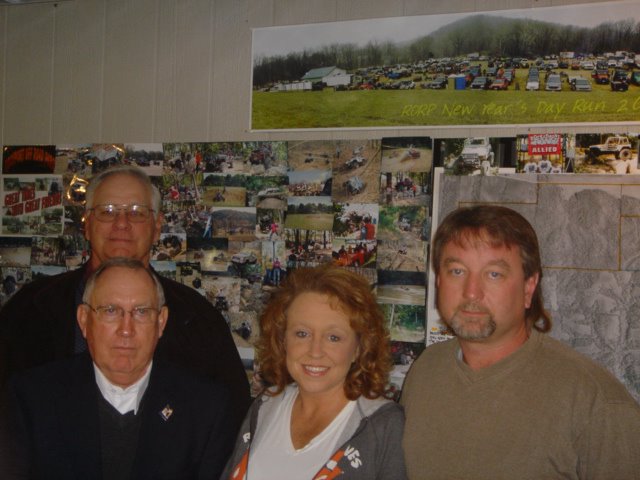
Mayor John Hayden of Pittsfield; Bill McCartney, ED for County; and Debbie & Tom Wombels of Rockport Off-Road Park Posted by Picasa

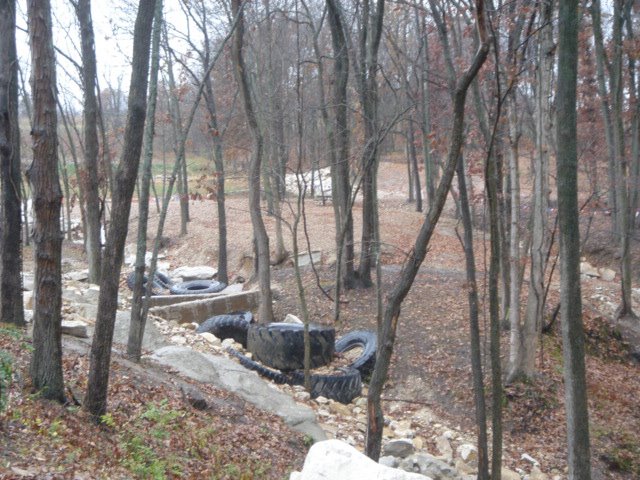
Rockport Off-Road Park Posted by Picasa

Rockport Off-Road Park; Rockport, IL Posted by Picasa

Thursday, November 24, 2005

Expert is Wrong—Entrepreneurism is Alive!

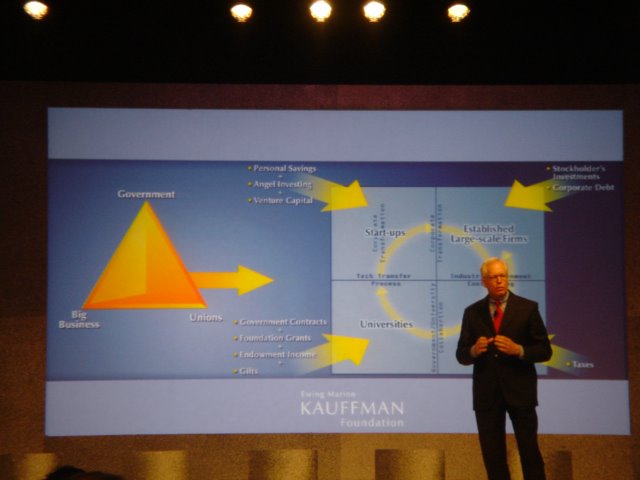
“The time and importance of entrepreneurism in America is over.” Carl Schramm, CEO of the Kauffman Foundation was quoting the words of the renowned economist John Kenneth Galbraith from his 1967 book The New Industrial State. At the time, Japan was on ascendancy. The USA was struggling with high unemployment and low growth. Galbraith and others thought that the country needed centralized planning just like the Japanese.

It was a time of BIG! There was Big Government, Big Business and Big Unions. These three worked together, setting out a plan for the country. This was a time of “What is good for General Motors is good for the U. S.”

How wrong they were. As Schramm pointed out the U. S. has moved from a Big to Better Society, with the growth of entrepreneurs rather than big business driving our economy. A number of changes speeded the transformation with changes in pension laws; development of Venture Capital; deregulation; and the winning of the cold war all encouraged a more entrepreneurial approach in our country.

Schramm’s prediction is that “we will move from being an ownership society to becoming the entrepreneurial society.” I couldn’t agree with him more.

Carl Schramm of Kauffman Foundation Posted by Picasa

Wednesday, November 23, 2005

What If’s! There Again!

“Sometimes you’ve just got to be in the right place at the right time,” was how Wayne Huizenga started out his presentation. He told of how when he got out of the navy in SC, he met his dad in Florida. They went out to lunch and happened to meet a friend of his fathers at the restaurant. The man was in Florida visiting his small, three-truck trash hauling business. He needed a manager and offered it to Wayne on the spot. From that chance meeting, Wayne Huizenga, who had no experience in trash hauling built a business into Waste Management. He also bought into Blockbuster Video on a similar fluke meeting. At the time, he didn’t even own a VCR, nor had ever rented a movie in his life.

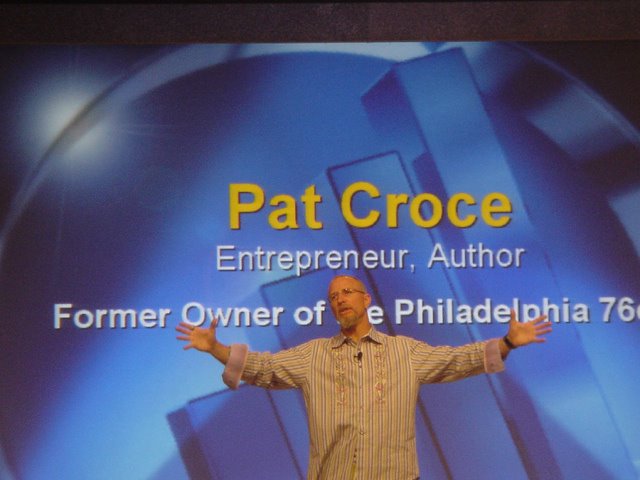
Pat Croce told of calling the owner of the Philadelphia 76ers fifty times before he finally sold him the team. His memorable quote was, “IQ is not as important as I Will!”

Several of the speakers spoke of ordinary people doing extraordinary things. How many ordinary people do you have in your towns that are doing extraordinary things? What if you multiplied that energy by two, five, or even ten times? What could you accomplish?

Tuesday, November 22, 2005

Lessons from the Movie Hoosiers

The movie Hoosiers is one of the best sports movies ever made. In my book BoomtownUSA, I wrote about how the town that achieves real teamwork within its various sectors is the one that reaps real success. The movie portrays this concept perfectly.

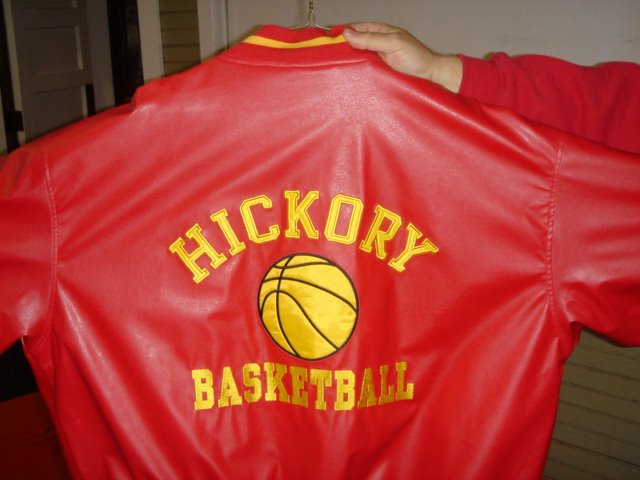
The movie was based upon the high school basketball team from Milan, Indiana (population 1,816) which beats a big-city team in the Indiana State Finals when there was only one class of teams. Hollywood changed the name of the team to the Hickory Huskers, telling the story of how the team struggles early in the season because its players are selfish and uncommitted. When the coach demands selflessness and commitment—and dares them to believe in themselves and have a great vision—the boys become an unstoppable winning team. The result—a state championship, is still treasured in basketball crazy Indiana.

The Huskers’ home court in the movie was the Hoosier Gym in Knightstown. I was thrilled to be giving a talk in the gym, getting a chance to tour it prior to my talk. It was built in 1922 and today is a wonderful tourist attraction for the town.

Knightstown, IN (population 2,148) is holding the 20th anniversary of Hoosiers June 3 to 11, 2006. They’ve invited back Gene Hackman, Barbara Hershey and Dennis Hopper, stars from the film for the festivities.

Nearby New Castle, hometown of Kent Benson and Steve Alford, is the site of the Indiana Basketball Hall of Fame. The town of 17,780 has the largest high school gymnasium in the country, which seats 11,000. In fact, seven of the top 10 largest high school gyms are located in Indiana.

High school sports are wonderful unifier in most towns, but what if we put as much effort into creating new jobs and opportunities in our towns as we spend in supporting our high school teams?

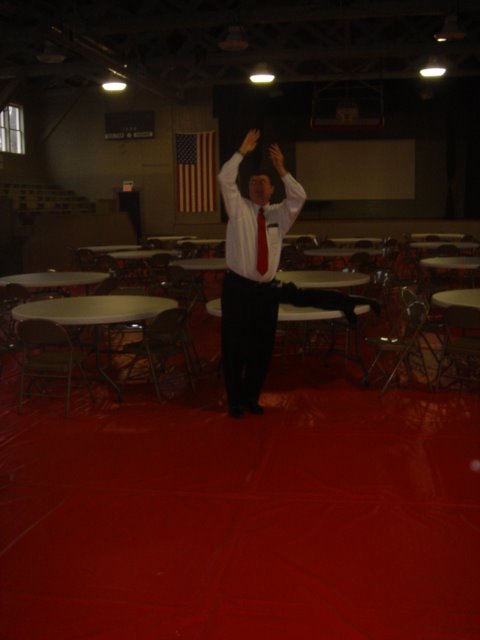
Former grade school in front of Hoosier Gym; Knightstown, IN Posted by Picasa

Hoosier Gym from stage Posted by Picasa

Me shooting a basket in Hoosier Gym Posted by Picasa

Hoosier Gym Locker Room Posted by Picasa

Hickory Huskers Letterman's Jacket Posted by Picasa

Harley Worth More than GM

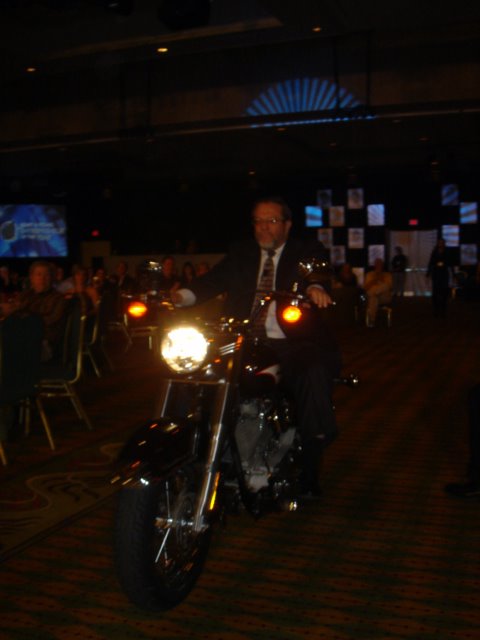
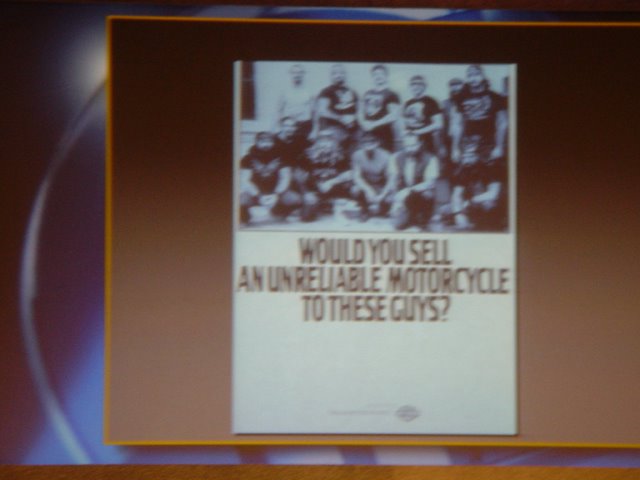
“Our first ad was…Thank God They Don’t Leak Oil Anymore,” Richard Teerlink, former Chairman and CEO of Harley Davidson told us at the Ernest & Young Entrepreneur of the Year Conference. He was talking about how 12 management people who invested $1 million and borrowed $85 million tried to turn around the motorcycle icon in 1981. “The joke was that no one owned only one Harley. You had to have a second one for parts. Our quality was horrible.” The company’s market share had shrunk from 65% in its heyday down to only 14% in 1981.

The company was facing heavy Japanese competition and was on the verge of bankruptcy. It had horrible labor relations. Its dealer network was in shambles. Sales in 1982 were $210 million with an operating loss of $15 million. Today Harley has a 49% market share, $5 billion in revenue and an operating profit of $1.4 billion.

Contrast that with GM, which announced yesterday that it was closing nine assembly plants and laying off 30,000 employees. GM was on top of the world when Harley was fighting for survival. Harley Davidson made the hard decisions, invested in new products and has excelled. GM has dawdled and the results are crystal clear. Today GM with 40 TIMES more sales than Harley has a market cap of $13.3 billion compared to $15.1 billion for Harley.

Teerlink also told us about his father who emigrated from Holland in 1920. “Dad was a tool and dye maker with a six grade education, but in Holland he knew that he would never be able to own his own business, so he came to the only country in the world where he knew he could. He eventually owned a machining shop in Chicago.”

The lessons learned? Anything is possible in the USA. If you produce a great product and take care of the customer, you can be wildly successful. If you don’t, watch out! Even a giant like GM can be humbled.

Richard Teerlink riding his Harley into talk Posted by Picasa

An Early Harley Ad after buyout Posted by Picasa

Monday, November 21, 2005

Entrepreneur of the Year Awards

I’m back today from three incredible days attending the Ernst & Young Entrepreneur of the Year Awards in Palm Springs, CA. I had won the award for Illinois and was in the running for the national award but was beat out by some company called Home Depot. But, even though Agracel didn’t win the award, it was a real honor to be nominated and to have the opportunity to take part in the excellent program that E&Y put together.

Arthur Blank told of how he and Bernie Marcus started Home Depot in 1979 after being fired from Handy Dan. They ran thru half of the capital that they raised in first nine months but as Blank said, “We went into the stores and made modifications based on listening to the customers as well as the sales associates of the stores.” Today Home Depot has 1,900 stores with a new one opening every 48 hours.

We had presentations by Wayne Huizenga, who started six companies that are listed on the NYSE including Waste Management, Blockbuster Video and Auto Nation; Carl Schramm of The Kauffman Foundation; Pat Croce, former owner of the Philadelphia 76ers; Richard Teerlink, former CEO of Harley-Davidson; and Angela Basset, Academy Award Nominee Actress. There was a lot of take home from their messages.

I also got to meet some incredible entrepreneurs who are leaders in their industries. I met the fastest growing ethanol producer in the USA; the leader in the manufacture of weather stations; the developer of a mower that can cut a football field in nine minutes (where was he when I was a kid?); the developer of the Flow Jet that you might have seen on American Chopper and many others. E&Y told us that collectively the 300+ entrepreneurs that were at the conference accounted for 850,000 jobs!

The Doobie Brothers played one night and Jay Leno was the MC for the Awards Gala. We had a blast! I’ll be reporting on some of the take-aways from the conference in the next couple of days.

My mother and mother-in-law at the awards banquet Posted by Picasa

Joan River's on the red carpet Posted by Picasa

Harley's first ad after the buyout Posted by Picasa

Pat Croce's presentation Posted by Picasa

My banner at the Ernest & Young Awards Posted by Picasa

Fireworks at Doobie Brothers Concert Posted by Picasa

Purple Martin Capitol

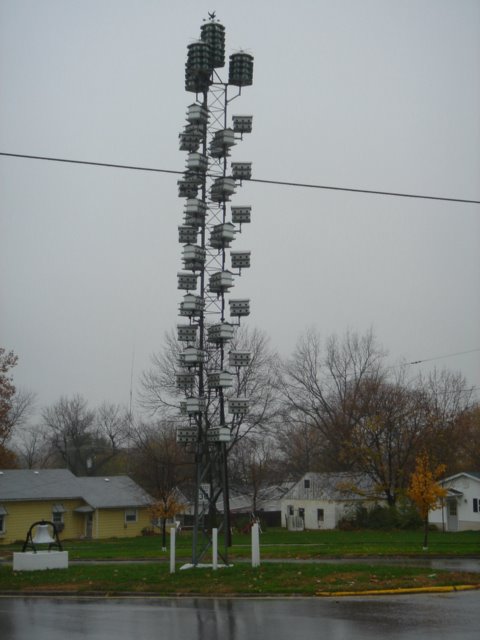
“He was in the TV antenna business and was concerned about cable TV coming in, hurting the demand for his antennas. He switched to making purple martin houses with his brother.” Bill McCartney, head of ED for Pike County, was telling me about J. L. Wade. His company developed into the premier producer of purple martin houses, eventually hiring over 200 people. Trio Manufacturing, the company that Wade started still makes purple martin houses, although employment is down to only 40 as demand for the houses has declined. But Griggsville, IL (population 1,258) remains the purple martin capitol of the USA.

Purple Martin sign in Griggsville, IL Posted by Picasa

Purple Martin house tower in Griggsville, IL Posted by Picasa

Oldest house in Pittsfield, IL. Radio sign in front. Posted by Picasa

Sunday, November 20, 2005

Radio Tour of Historical Houses

“We’ve got nine talking houses. Each has a radio transmitter that broadcasts the history of the house done by period actors.” Mayor John Hayden of Pittsfield, IL was explaining to me how the town was promoting their historical houses that date back to the 1830s and include many that have some tie to Abraham Lincoln. It costs about $350/house to set up, an amount that every town I’ve been in should be able to afford. A map of the location of the houses makes it easy to find. This is another idea that other towns should use to make their tours more user friendly.

Saturday, November 19, 2005

Community Foundations for the Long-Term

I received the following comment to a recent blog from Lael. Here is what she wrote:
“Our community needs its very own endowment fund for community development but we are finding a pocket of resistance from some folks who think any money raised should immediately be spent rather than saved as a permanent asset with only the interest utilized to facilitate community development. They also resist the idea of helping the poor through this fund. I don’t understand this but would love any ideas on how to overcome the resistance. We have decided to call it a Legacy fund rather than endowment. This is a rural community with the biggest town being under 10,000 and total county population of approx 40,000. 25% of the population lives below the poverty level.”

I’ve visited some towns and counties this size that have $10 to $30 million in their endowments. They have all taken the long-term approach, not immediately spending any money raised, but rather investing for their kids and grandkids. A bit of patience and the power of compound interest can yield some wonderful benefits for the community.

Yesterday Should have been a State Holiday!

“The price of brush ground has skyrocketed from $300/acre ten years ago to over $3,000 today. It is worth as much as the finest farmland in the county.” Bill McCartney, the head of economic development for Pittsfield, IL (population 4,211) was explaining to me on my tour of Pike County, IL earlier this week. I was stunned! What economic force could possibly be driving values to these levels?

McCartney quickly explained to how raw land values have escalated so dramatically, “Deer! We have the highest population of deer in the state. We have 35 outfitters in the county who are buying and leasing land for hunting purposes. They are building hunting lodges that are incredible. We have a new one that has 30 rooms in it. These hunters, who come from all over the country, are paying $2500/week.”

Bow season was just closing and shotgun season opened yesterday in Illinois. In many parts of the state, the local high schools close down for the day because if they didn’t their attendance would fall precipitously.

We take our deer hunting seriously. Last year one local plant manager told me, “I had one long-term worker who came up to me with a request for time off. He handed me the request with one hand and I asked him what he had in the other hand? He said, ‘That’s my letter of resignation, in case that you don’t accept my time off for opening day.’ And, he was deadly series.”

I did a quick, back-of-the-envelop calc of the financial impact of only the increase in value of this land, not taking into account the dollars that flow into the county each year with hunter’s spending money. Pike County has 830.2 sq. miles of land, or just over 500,000 acres. About 150,000 of this is scrub ground, which means that this previously worthless land has escalated over $400 million in value in the past 10 years, or $23,000 per capita increase in net worth for every person in the county. Add in the economic impact of the money spent each year, added tax revenue, etc. and you have an incredible impact and one that is growing!

Pike County is not an anomaly. The increased demand for hunting, fishing and other recreational pursuits is a growing one. It is being driven by the aging baby boomer generation, which has much more disposable income and is willing to pay to pursue their passions. If you have the natural resources in your community, you might look at how you take advantage of this phenomenon.

Friday, November 18, 2005

What If, Again?

I received this email from someone in Shawneetown, IL. “I think probably our area's biggest claim to fame is... that when Chicago's 'founding fathers' wanted to expand their small hamlet, they came to the bank in Old Shawneetown (3 miles East, on the Ohio River) and requested a loan. Our 'founding fathers' (in all their wisdom) said... “NO! Chicago is too far away from Shawneetown and the Ohio River to ever amount to anything”

The main mode of transportation changed with the development of railroads and suddenly Shawneetown, located in close proximity to the Ohio River, wasn’t as strategically located. The town has been in a slow decline ever since.

What if Shawneetown had been the banker of Chicago and assisted that community to develop? What if the residents of Shawneetown had reaped some of the riches from Chicago? What would Shawneetown look like today?

Thursday, November 17, 2005


Oil Rig near Sidney, MT Posted by Picasa

Boom and Bust—Not Those Bumper Stickers, Again!

I was in oil boomtowns on consecutive days last week, in Enid, OK and Sidney, MT. In my talks, I challenged the local residents to make something better of the windfall from this current boom. I asked how many people remembered the bust of the mid 80s when virtually every pickup truck in town had a bumper sticker that said, “Lord, Give Us One More Boom, We Promise Not to piss it Away This Time!” Lot’s of hands went up and heads nodded.

It was a painful time for many people. The populations of the two counties fell by over 10% from the 1980 to 1990 census. There were numerous foreclosures, bankruptcies and the splitting up of families. People were shell-shocked. Some lost everything.

In driving to each town, I passed numerous tanker trucks, oil service vehicles and new pickups. Every oil service lot was bustling with activity. Enid, which has a much more diversified economy, was not as dramatic as what I saw in Sidney, so let me concentrate on Sidney.

Leslie Messer, head of the Richland County EDC showed me around the community. She told me, “We’ve got 21 drilling rigs going 24/7. We’re pumping over 500,000 barrels/day. This is up from about 250 or 300,000 barrels/day five years ago, when we only had about 10 drilling rigs going.”

I asked her about how this oil boom differed from that of the 1970s. “We are getting a much higher quality of worker in the oil fields today. They are all drug tested and have to have a clean record. We’re having trouble finding enough workers even though the base pay is $22 to $25/hour, plus a $75/day stipend and a sign-on bonus. The typical shift is four days on and three days off. It isn’t a bad gig.”

The technology of oil drilling has also advanced greatly in the past 20 years. Today the drilling rig punches a hole in the middle of the field and from that hole four horizontal bores are made, allowing one hole to cover an entire section of land (640 acres).

I learned at the annual meeting in Sidney that the state is trying to take a larger portion of the resource tax on oil, coal and other mined products. Currently, the state gets 55% and the local taxing bodies 45%. With the increase in oil prices and production, Richland County taxing bodies are bringing in $1 million/month into public coffers.

Both the local state rep and state senator were at the meeting urging local citizens to find innovative, long-term uses for these funds and not to allow the state government to siphon off these funds. I would agree and urged them in my talk to think of how they are not only going to invest these public funds but also some of the extra profits both for landowners and service providers to the oil industry in the community.

If I were developing a plan for them, I would concentrate on the development of entrepreneurs and infrastructure for the region. I would want to develop both a nurturing environment for these entrepreneurs but also a high quality of life and sense of place to attract them from larger cities. It is going to be tough to recruit in a new industry, trying to compete with the wages of the oil boom. I hope that Sidney and Richland County don’t blow this chance to position their community for the future for the good of their children and grandchildren. I do not want to return to see those blasted bumper stickers again.

Wednesday, November 16, 2005

NY Times Small-Town Shops Article

In today's New York Times there is a great article on the transformation happening in small towns because of the internet. The article focuses on the new trend of "the Internet propping up bricks and mortar downtown." This is a great example of how technology is changing the economy in the agurbs. In short, the internet allows small-town shops to turn over the inventory more quickly, as well as add more products and variety. E-commerce encourages more interest and customer traffic, diversifies the revenue stream and contributes to downtown street life for these shops. Read the article here and let me know if you have any small-town shops growing their business online.

‘Can Do’ Sidney

How does a remote town of 4,774 develop a $4.5 million community foundation? Or, a privately developed indoor hockey dome? Or, a 42 bed hospital with 15 docs? Or, a beautiful 18 hole country club and clubhouse?

It was my second visit back to Sidney, MT this year. I toured the town and keynoted their annual EDC meeting. About 150 people showed up, quite a turnout for a town this size.

Sidney is the county seat of Richland County, which is twice the size of Rhode Island with a population density of 4.4 people/square mile (RI is 1034 people/sq. mi.). The county’s population peaked in 1980 at 12,243 and had fallen to 9,112 by 2004.

Sidney has a strong, diversified agricultural base with sugar beets, alfalfa, corn and barley being the main crops. There is a sugar beet mill and barley terminal in the town, adding value to those crops and providing hundreds of great jobs. The barley terminal is owned by Anheuser-Busch and the local plant manager told me that Augie Busch visits it occasionally. Two new mega-dairies, built in the past five years with more in the planning stages are another diversification occurring in the ag base. There is potential to expand irrigated production from the present 350,000 acres to 600,000 acres.

Brian Milne, incoming chair of the Foundation for Community Care told me, “We started the foundation in 1982 when seven dedicated local people got together and just made it happen. We are really starting to grow in the past few years, with a large number of bequests. We are focused upon the overall health of the community in our giving.”

The hockey dome, hospital and country club were all done in much the same manner. Local people put their minds and hearts to doing something better for the community and then just got it done.

What do you need to get done in your town?

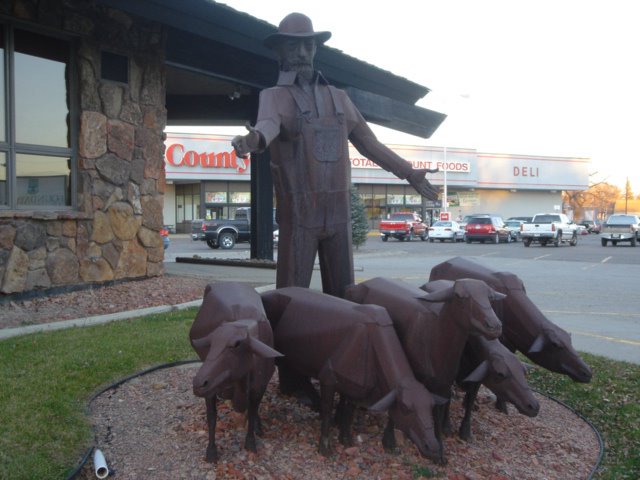
Sculpture of Foundation for Community Care in Sidney, MT Posted by Picasa

Tuesday, November 15, 2005

What If?

What if? It is one of my favorite questions to ask in towns as I see what happens over time from decisions that have been made in the past. For example: What if Advance Foods had decided to locate in some other OK town, instead of Enid? How much different would Enid be today, with 1800 fewer employees?

As I was touring the community with Dr. Jim Strate and Teri Holle of Autry Tech we drove by Phillips University, or what used to be Phillips University. Today the campus has become a branch campus for one of the state schools.

Phillips was started in 1906 as a Disciple of Christ College and was a vibrant part of Enid until it closed in 2002, due to continuing losses and mounting debts. When they closed, they sold off all of the assets. One painting, which sat behind the president’s desk at the college, was sold for more than the total debt of Phillips! The proceeds from the art collection would have not only paid off all debts, but also provided an endowment that could have supported Phillips for years into the future.

What if someone had thought to look into the value of the art collection prior to making the decision to close? Are there any assets in your town that you might be overlooking?

Monday, November 14, 2005

INC 500 Towns

Chris Gibbons, from Littleton, CO sent out a very interesting email this morning to his economic gardening group about the location of the INC 500 companies. Here is what he pointed out:

The INC 500 is out for this year. While a number of metro areas are represented, every year I am always struck by how widespread entrepreneurial activity is. Some of the towns on this year’s list:

Hingham MA
Ferndale MI
Alpharetta GA
Birmingham MI
River Edge NJ
Dothan AL
Rock Island IL
Flowood MS
Gahanna OH
Golden CO
Missoula MT
Lindon UT
Ballston Spa NY
Liberty Lake WA
Verona WI
Maryville TN
Temecula CA
Duluth GA
Longmont CO
Granite Falls MN
Warner Robins GA
Strongsville OH
Keystone CO
Mayfield OH
Fndlay OH
Darnestown MD
Carlsbad CA
Scappoose OR
Parkville MO
Eastport MI
Bluffdale UT
Stillwater MN
Stafford TX
South Riding VA
Linthicum MD
Havelock NC
Huntsville AL
Lawton OK
Owasso, OK
Lafayette CO
Cary NC
Woodstock GA
Bedminster NJ
Natick MA
Vernalis CA
Le Mars IA
Eagan MN
Milton DE
Lyons IL
Franklin TN
King of Prussia PA
Yakima WA
Doylestown PA
Cookeville TN
Wakefield MA
Wayne PA
Nicholasville KY
Fremont NB
Port Washington NY
Northville MI
Chamblee GA
Frankfort IL
St. Peters MO
Blue Bell PA
Brentwood TN
Wyoming MI
Fort Washington PA
Wetumpka AL
St. Charles MO

The Grapes of Wrath Reversed

“We moved here from CA and found that we had a workforce with a better work ethic and better morals. They were more appreciative of their job here than what we found in CA where people don’t have to work as hard to make decent money.” Scott Downey, of Downey Decal & Graphics, Inc. (www.downeydecal.com) was telling me of his decision to move to Enid, OK from Menifee, CA, located between LA and San Diego. “I’ve had a number of other business owners talk with me about my move. They’ve got lots of questions and I believe that I’ll end up bringing a number of other CA companies out here.”

Scott manufacters adhesive decals that are used on everything from melons to semi-trailers. He specializes in servicing OEM markets especially in the fishing (300 rod manufacturers use his decals); hunting (Orvis, Cabellas and others); fresh produce (he did 5 million decals for melons last week); aircraft; vehicle; and welding and medical gas safety.

I asked him why he would move a successful business from fast growing CA. “There were a couple of incidents that culminated in me being forced to make a decision on what was best for the business. I had been doing the decal business part time since 1991 and went full time in 1999. We’ve quadrupled since then and outgrew a facility we were in.”

“The county changed its zoning regulations, which didn’t allow me to expand and property values have skyrocketed making a move very expensive. As an example, the property that I bought in 1999 for $145,000 is now worth $800,000. I wanted to expand where I was, but the county wouldn’t let me do anything to my building. The straw that broke my back was when I got hit with what is called the Gray Davis Tax, which is a tax on business assets. The county forgot to assess the tax and then did it so retroactively for the previous four years.”

“I started to look, talking with customers around the country. We liked what we saw in Enid. I’m still living in CA because my daughter is a junior in high school, but will move here in a few years.”

In addition to a better workforce, Scott feels that he is saving 12 to 15%/year in operating costs. He also has found that he has a better shipping window for his products. He has cut delivery time to the east coast in half and has several hours more/day to get product out of the plant. He also added, “And, we’ve got each of our top five customers within 350 miles of Enid.”

Scott is on the leading edge of a shift that I’ve seen in several other towns that I’ve visited like Prescott, AZ and Grants Pass, OR. Smaller, more specialized companies are fleeing expensive CA for greener pastures where the costs are lower and there is this perception of a better work ethic.

As I reported last week, the Census Bureau found that there are more people leaving CA than are moving to it. I am reminded of a demographer who asked where the Appalachia of the USA (i.e. poor, uneducated) in the future is going to lie. He astounded everyone in the audience by predicting that CA was headed for a cliff because it has the lowest high school graduation rate in the USA.

Keep your eyes and ears open. Watch for the signs that CA’s best days might lie behind. And, if so, there will be many more Scott Downeys moving back in a reverse migration that started in the 1930s, immortalized in the movie “The Grapes of Wrath.”

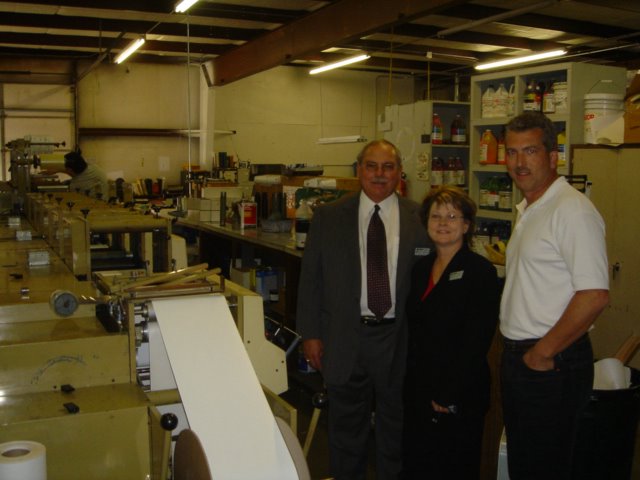
Dr. Jim Strate, Teri Holle and Scott Downey at Downey Decals and Graphics Posted by Picasa

Sunday, November 13, 2005

Something Missing on the Sign

All it said on the sign was “Welcome to Kingfisher; Birthplace of Sam Walton; Founder of Wal-Mart.” It should have also read: This is where he developed his small town values and entrepreneurial spirit.

I am amazed as I travel around the country, learning the stories of less well-known entrepreneurs of how many were born and raised in small towns. A good friend, Dean Samuel, often sends me stories of people who started out in small town America and have gone onto tremendous success in this country. Let me know whom you know of that fits this category.