The tens of millions of dollars that have been donated back to their hometown was one of the things that impressed me most about Red Wing, MN. It is a tradition that dates back over a century and has made a huge difference for this town of 16,000.
One of the first evidences of superlative giving is the T. B. Sheldon Theatre, named for the local citizen who left $83,000 of the $92,000 cost to the city when he died in 1900. The theater eventually became a movie theater in 1936 and slowly deteriorated from there until a $3.5 million bond referendum in 1986, which passed by a 5:1 margin, restored it to its past glory. It is a wonderful asset for the town.
The local YMCA and St. James Hotel, both 1900 structures have been redone to their past glories because of local citizens. The YMCA’s $7.5 million local fund raising has allowed Red Wing to have one of the nicest Y’s I’ve seen. The St. James was rescued and restored by the Red Wing Shoe Company, another major local employer and giver. The Anderson Center for Interdisciplinary Studies is located on the estate of A. P. Anderson, a local who invented Puffed Rice and other food products, leaving it to the community.
Red Wing boosts more than 900 acres of parks, many of which were donated land from locals. The Red Wing Wildlife League, which was formed in the 1920’s, has purchased and preserved over 3,000 acres of wetlands on the edge of town abutting the Mississippi River.
Those are only some of the examples of incredible giving that I saw in Red Wing. They exemplify one of the best examples of what local citizens who care about their town can do to make it a wonderful place in which to live.
Sunday, June 12, 2005


Saturday, June 11, 2005
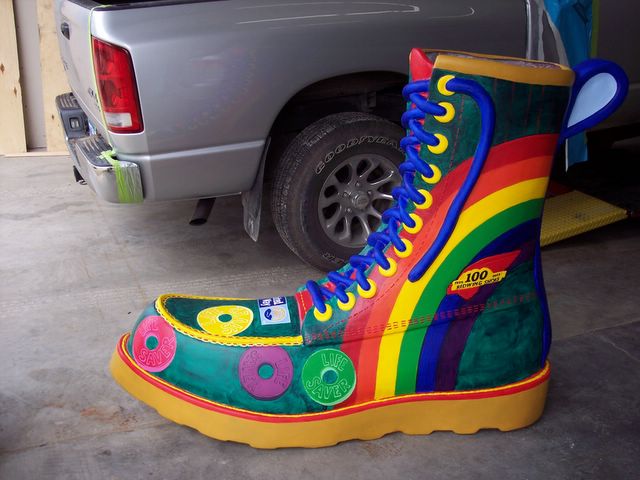

100 Years of Boots
“First in 100 Years Warehouse Sale or Once in 100 Years Sale is how we are going to promote it,” is how Marcy Dowse of Integreat explained to me how she is promoting Red Wing Shoes 100 year celebration July 28th to 31st. The company is a family business, still owned and run by the Sweasy family.
Bill Sweasy, Jr., 3rd generation CEO continues to reinvest in Red Wing, MN and to fly in the face of conventional wisdom by continuing to make its world famous boots in the USA. The company, which has over 700 employees in Red Wing, also has done major redevelopment in the downtown area. Not only is its headquarters located in a set of historical buildings on the riverfront, but the company purchased and completely remodeled the historic St. James Hotel. Their original shoe factory, a block down the street will be redeveloped into a company museum.
As part of their 100 anniversary celebration Red Wing Shoes has supported a boot design competition that will have supersized Red Wing boots designed by local artists decorating the town. The first ones were being installed on my visit there this week. I’m on the road without any tech help, but I hope to post some pictures of these boots on my blogspot.
If you need boots and even if you don’t, Red Wing is going to be hopping in late July.
Bill Sweasy, Jr., 3rd generation CEO continues to reinvest in Red Wing, MN and to fly in the face of conventional wisdom by continuing to make its world famous boots in the USA. The company, which has over 700 employees in Red Wing, also has done major redevelopment in the downtown area. Not only is its headquarters located in a set of historical buildings on the riverfront, but the company purchased and completely remodeled the historic St. James Hotel. Their original shoe factory, a block down the street will be redeveloped into a company museum.
As part of their 100 anniversary celebration Red Wing Shoes has supported a boot design competition that will have supersized Red Wing boots designed by local artists decorating the town. The first ones were being installed on my visit there this week. I’m on the road without any tech help, but I hope to post some pictures of these boots on my blogspot.
If you need boots and even if you don’t, Red Wing is going to be hopping in late July.

Friday, June 10, 2005

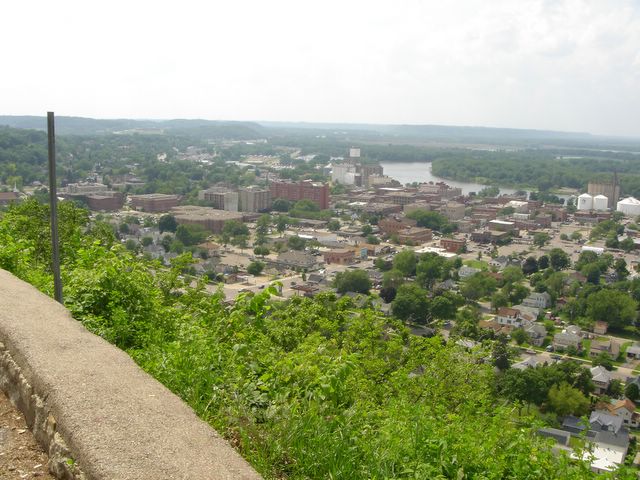
What a Downtown Should Look Like
Red Wing’s downtown has a residential component to it that is comparable to two other wonderful downtowns, Traverse City, MI and Oxford, MS, that I’ve seen in my travels over the past year. Each of these towns has created a very special “sense of place” about their communities as a result. What makes them so special compared to others?
Each of these towns have redeveloped the old apartments and offices on the second and third floors into apartments that are attracting young professionals, empty nesters and retired people back into their downtowns. As a result coffee shops, restaurants and other entertainment venues have relocated into suddenly more vibrant downtowns.
Red Wing’s location on the banks of the Mississippi River puts it into a perfect setting for such a revival. The Red Wing Shoe Company refurbished the 130 year old St. James Hotel, an incredibly magnificent, stately historical building. Their local leadership and investment have encouraged others to transform other historical buildings, turning Red Wing, MN into one of the more picturesque downtowns I’ve seen in my travels.
If you go to visit be sure to check out the “boat house” marina, which is filled with floating structures that date back to the early 1900s. They are held in place by “gin poles” to keep them from floating down the Mississippi River.
I asked Mayor Dummer, “What are gin poles?”
“Why, they were what the owners tied their gin onto during prohibition. They’ve had the name gin poles ever since.”
Red Wing’s downtown isn’t perfect yet. They need to do such things as connecting it to their 20 mile trail system and 900 acres of parks. But they’ve got a visioning process started and I’m betting that they figure it out on their own. I’ll be back to check it out.
Each of these towns have redeveloped the old apartments and offices on the second and third floors into apartments that are attracting young professionals, empty nesters and retired people back into their downtowns. As a result coffee shops, restaurants and other entertainment venues have relocated into suddenly more vibrant downtowns.
Red Wing’s location on the banks of the Mississippi River puts it into a perfect setting for such a revival. The Red Wing Shoe Company refurbished the 130 year old St. James Hotel, an incredibly magnificent, stately historical building. Their local leadership and investment have encouraged others to transform other historical buildings, turning Red Wing, MN into one of the more picturesque downtowns I’ve seen in my travels.
If you go to visit be sure to check out the “boat house” marina, which is filled with floating structures that date back to the early 1900s. They are held in place by “gin poles” to keep them from floating down the Mississippi River.
I asked Mayor Dummer, “What are gin poles?”
“Why, they were what the owners tied their gin onto during prohibition. They’ve had the name gin poles ever since.”
Red Wing’s downtown isn’t perfect yet. They need to do such things as connecting it to their 20 mile trail system and 900 acres of parks. But they’ve got a visioning process started and I’m betting that they figure it out on their own. I’ll be back to check it out.
Thursday, June 09, 2005
Red Wing, MN
The 250 flower baskets scattered around the downtown area were what really caught my wife’s attention when we first visited Red Wing, MN some six years ago. I returned this week to give my BoomtownUSA talk and the baskets are still there. They really accent an incredible downtown that is in the midst of a revival.
Red Wing (population 16,116) sits right along a bend in the Mississippi River with incredible bluffs surrounding it. They’ve historically had a very strong manufacturing base with such famous companies as Red Wing Shoes and Red Wing Pottery still headquartered in the community. However, in the past five years they’ve lost about 20% of their manufacturing jobs and the community is searching for a new vision for their community.
New Mayor Donna Dummer has started Imagine Red Wing, a long term planning process that involves citizens from all walks of life. They’ve had a series of meetings and continue to work on what they want their town to look like in the future. I was impressed with the participants that I met and some of their ideas for their community. I’ll share some of the best over the next couple of days on this blog.
Red Wing (population 16,116) sits right along a bend in the Mississippi River with incredible bluffs surrounding it. They’ve historically had a very strong manufacturing base with such famous companies as Red Wing Shoes and Red Wing Pottery still headquartered in the community. However, in the past five years they’ve lost about 20% of their manufacturing jobs and the community is searching for a new vision for their community.
New Mayor Donna Dummer has started Imagine Red Wing, a long term planning process that involves citizens from all walks of life. They’ve had a series of meetings and continue to work on what they want their town to look like in the future. I was impressed with the participants that I met and some of their ideas for their community. I’ll share some of the best over the next couple of days on this blog.
Wednesday, June 08, 2005
Facts of Rural Development
I received the following email this past week from the Center for Rural Affairs from Nebraska. They were one of the six recipients for a $2 million award from the W. K. Kellogg Foundation’s Entrepreneurship Grants for Rural America. What do you think of their ideas?
Given the Center for Rural Affairs experience and involvement with community development in 20-plus communities over several years, five undeniable facts have emerged.
1. Trends that show little to no hope for small rural communities are wrong. It takes great effort, but small rural communities can survive and even flourish.
2. Rural youth want to return and live in the area they grew up in. Every survey we have conducted indicates youth cares about the community and wants what is best for it and for them.
3. Young people do not want to be “retained.” They want to be given opportunities for growth and prosperity like their parents had, better known as “youth attraction.”
4. Entrepreneurial growth is the strongest mechanism for small community survival, not industrial business attraction.
5. Small rural communities don’t all suffer from the same problems. No model can fix the woes of all communities. We must recognize that only the community can address their problems. The best we can do is to provide resources for them to get the job done.
Given the Center for Rural Affairs experience and involvement with community development in 20-plus communities over several years, five undeniable facts have emerged.
1. Trends that show little to no hope for small rural communities are wrong. It takes great effort, but small rural communities can survive and even flourish.
2. Rural youth want to return and live in the area they grew up in. Every survey we have conducted indicates youth cares about the community and wants what is best for it and for them.
3. Young people do not want to be “retained.” They want to be given opportunities for growth and prosperity like their parents had, better known as “youth attraction.”
4. Entrepreneurial growth is the strongest mechanism for small community survival, not industrial business attraction.
5. Small rural communities don’t all suffer from the same problems. No model can fix the woes of all communities. We must recognize that only the community can address their problems. The best we can do is to provide resources for them to get the job done.
Tuesday, June 07, 2005
What D’Ya Know?
Each year I read with interest Warren Buffet’s annual letter and the Dallas Fed’s Annual Report. Both take a long-term view are written with great clarity. The Fed’s report this year, What D’Ya Know? (http://dallasfed.org/pubs/e-sub/e-pubs.html) is a look at the impact of lifelong learning upon the pursuit of the American Dream.
In 1940, 60% of the jobs in the USA only required an eighth grade education, compared to around 5% today. Today’s workforce is much better educated, with over half of the American workforce having a least some postsecondary education.
The average estimated lifetime earnings for someone with an eighth grade education is $976,350; high school grad is $1,455,253; Bachelor degree is $2,567,174; and professional degree is $5,254,193.
The report goes on to explain the importance of education and how all of us are gong to have to become lifelong learners. The importance of community colleges and technical schools in our agurbs® is going to become more important into the future.
In 1940, 60% of the jobs in the USA only required an eighth grade education, compared to around 5% today. Today’s workforce is much better educated, with over half of the American workforce having a least some postsecondary education.
The average estimated lifetime earnings for someone with an eighth grade education is $976,350; high school grad is $1,455,253; Bachelor degree is $2,567,174; and professional degree is $5,254,193.
The report goes on to explain the importance of education and how all of us are gong to have to become lifelong learners. The importance of community colleges and technical schools in our agurbs® is going to become more important into the future.
Monday, June 06, 2005
Entrepreneurial Regions Given a Boost
Since 2004 nearly 200 applicants have been striving to win the W. K. Kellogg Foundation’s (www.wkkf.org) rural entrepreneurship grants. This week those awards of up to $2 million each were made to regional efforts in NE; NM; NC; OR; SD/WY; and WV. All of the winners were regional efforts, taking in from five counties to an entire state and in one case (SD/WY) reaching across state lines with an initiative.
Regionalism is a continuing trend that I’m witnessing more frequently as I travel around the country. No longer are interested citizens letting artificial boundaries, set by surveyors in the 19th Century, limit their ability to connect and transform their populations.
Regionalism is a continuing trend that I’m witnessing more frequently as I travel around the country. No longer are interested citizens letting artificial boundaries, set by surveyors in the 19th Century, limit their ability to connect and transform their populations.
Sunday, June 05, 2005
Butte—From Boom to Bust to Revival
It was the biggest city between Chicago and San Francisco at the turn of the 20th Century, an urban island in an ocean of wilderness. Today it is down to 33,892, a fraction of its population from 1880 to 1920. Butte hill was the richest copper on the Earth. Entrepreneurs like William Clark, Marcus Daly and Augustus Heinze were “the Copper Kings” of the era. These copper barons dominated Montana’s economy and politics, controlling four of the five of the state’s major daily newspapers, railroads, banks, power companies, land and even portions of the state Legislature.
Butte was a mecca for newly arrived immigrants. The pay was very good and dependable. Miners work hard, but also play hard. The tradition for a new tavern was to flush the front door key down the toilet on opening day, because there was no reason to ever close the place down again as thousands of miners worked around the clock.
Butte’s low point came in 1982 when Atlantic Richfield Co., which bought the Anaconda Copper Mining Co. in 1977, closed the mine down from one day to the next. Businesses closed, people left town and the town dwindled.
Some of the town’s main attributes today are the buildings and infrastructure built during the boom times. The Uptown part of town was designated a National Historic Landmark in 1961. Jeff Francis, a Florida native, sold his antique and collectible show business there in 1999 and has been splitting his time between FL and MT ever since. He has spent $1.5 million on 12 historic commercial buildings that date from 1890 to 1920. He’s convinced that Butte is on the cusp of a new boom, not built upon copper but on “side-open spaces, peace and serenity, outdoor recreation, it’s all the vogue. Butte has it. Look at Park City, Aspen, and Telluride. They were all mining towns. Look at them now.”
Francis is pushing Butte into the festival business. He is bringing in 200 to 300 antique and collectible dealers for one of the first of many shows that he intends to develop. It should be an interesting change for a town that was only going down.
Butte was a mecca for newly arrived immigrants. The pay was very good and dependable. Miners work hard, but also play hard. The tradition for a new tavern was to flush the front door key down the toilet on opening day, because there was no reason to ever close the place down again as thousands of miners worked around the clock.
Butte’s low point came in 1982 when Atlantic Richfield Co., which bought the Anaconda Copper Mining Co. in 1977, closed the mine down from one day to the next. Businesses closed, people left town and the town dwindled.
Some of the town’s main attributes today are the buildings and infrastructure built during the boom times. The Uptown part of town was designated a National Historic Landmark in 1961. Jeff Francis, a Florida native, sold his antique and collectible show business there in 1999 and has been splitting his time between FL and MT ever since. He has spent $1.5 million on 12 historic commercial buildings that date from 1890 to 1920. He’s convinced that Butte is on the cusp of a new boom, not built upon copper but on “side-open spaces, peace and serenity, outdoor recreation, it’s all the vogue. Butte has it. Look at Park City, Aspen, and Telluride. They were all mining towns. Look at them now.”
Francis is pushing Butte into the festival business. He is bringing in 200 to 300 antique and collectible dealers for one of the first of many shows that he intends to develop. It should be an interesting change for a town that was only going down.
Saturday, June 04, 2005
Cabela’s Stamp of Approval
When Cabela’s picks your town for a retail store there is a certain aura that goes with their choice. After all, the company only has 10 retail stores in addition to their catalog business, but did over $1.6 billion in sales in 2004. These are BIG stores! In fact they are often the major tourist attraction in some states.
Cabela’s picked Dundee, MI a town of 2,800 in 1999 (3,522 population in 2004) for a new 225,000 sf store. The town is midway between Ann Arbor and Toledo, OH on route 23 (not an interstate). It’s a young town with a medium age of only 30.7 years compared to the national average of 35.3. But it was a sleepy town until then.
Cabela’s has hired 600 employees, but Chuck Drexler, of the Dundee Businessman’s Association estimates that more than 1000 jobs have been created since the retailer opened their doors, “People now know where we’re at. In Cabela’s first year of operation, it brought 6 million people to town.”
Recently Global Engine Alliance, a joint venture of Daimler Chrysler, Mitsubishi and Hyundai announced the building of two automobile-engine plants in Dundee that will eventually hire another 800.
Dundee is a town on the move. It got a break and is making the most of it.
Cabela’s picked Dundee, MI a town of 2,800 in 1999 (3,522 population in 2004) for a new 225,000 sf store. The town is midway between Ann Arbor and Toledo, OH on route 23 (not an interstate). It’s a young town with a medium age of only 30.7 years compared to the national average of 35.3. But it was a sleepy town until then.
Cabela’s has hired 600 employees, but Chuck Drexler, of the Dundee Businessman’s Association estimates that more than 1000 jobs have been created since the retailer opened their doors, “People now know where we’re at. In Cabela’s first year of operation, it brought 6 million people to town.”
Recently Global Engine Alliance, a joint venture of Daimler Chrysler, Mitsubishi and Hyundai announced the building of two automobile-engine plants in Dundee that will eventually hire another 800.
Dundee is a town on the move. It got a break and is making the most of it.
Friday, June 03, 2005
Dream Factory in MS
The fastest growing car manufacturer in the USA isn’t Toyota, which seems to get all of the press, but Nissan which has gone thru a transformation since the mid 90s. A new plant in Canton, MS, built in 2003 at a cost of $1.4 billion and size of six football fields, helped Nissan to grow its USA sales by 16% in 2004 compared to Toyota’s 10%. Ford and GM both lost sales volume last year.
The thinking of putting a plant in MS was counter-intuitive. Alabama and Tennessee were typically the states of choice in the south for new auto plants due to their more industrialized traditions. But Mississippi won over Nissan and is rapidly transforming the state with this new plant. Business 2.0 features the plant in their June, 2005 issue.
I blogged on the impact of this plant in small towns throughout Mississippi on February 14 and 15th. Already 50 firms, hiring 5,000 people in over 18 towns have set up shop in the state because of Nissan. More will follow.
One of the interesting tidbits from the Business 2.0 story is how Nissan has developed a system to alleviate hail damage to their vehicles at the plant. With as many as 12,000 new vehicles on the back lot being prepped to ship and Mississippi notorious for their hailstorms, Nissan developed a sonic system to break up hailstones in the sky. They’ve installed 12-foot cannons tied into a Doppler radar system that searches for hail formations at 50,000 feet. When the radar system detects these formations it automatically triggers the sonic blasts, breaking them up. They’ve used the system four times already and haven’t lost one car to hail to date.
The thinking of putting a plant in MS was counter-intuitive. Alabama and Tennessee were typically the states of choice in the south for new auto plants due to their more industrialized traditions. But Mississippi won over Nissan and is rapidly transforming the state with this new plant. Business 2.0 features the plant in their June, 2005 issue.
I blogged on the impact of this plant in small towns throughout Mississippi on February 14 and 15th. Already 50 firms, hiring 5,000 people in over 18 towns have set up shop in the state because of Nissan. More will follow.
One of the interesting tidbits from the Business 2.0 story is how Nissan has developed a system to alleviate hail damage to their vehicles at the plant. With as many as 12,000 new vehicles on the back lot being prepped to ship and Mississippi notorious for their hailstorms, Nissan developed a sonic system to break up hailstones in the sky. They’ve installed 12-foot cannons tied into a Doppler radar system that searches for hail formations at 50,000 feet. When the radar system detects these formations it automatically triggers the sonic blasts, breaking them up. They’ve used the system four times already and haven’t lost one car to hail to date.
Thursday, June 02, 2005
Fear & Rejection
“Fear & Rejection” was how Europe’s recent slide backwards was written about today by David Brooks, NY Times columnist (http://www.nytimes.com/2005/06/02/opinion/02brooks.html?th&emc=th). He cites the many policies that have been rejected in the USA in the past several years but embraced by Europe as the reason for their past decade of decline.
Brooks notes that Europe today has a standard of living 1/3 lower than here, unemployment has remained at a stubborn 8 to 11% and 3% growth has only been hit once in the past 14 years. It will only get worse. “Europe’s population is aging and shrinking. By 2040, the European median age will be around 50. Nearly a third of the population will be over 65.”
One of his more interesting thoughts in the column was Brooks’s observations about momentum for countries. “It is happier to live in a poor country that is moving forward—where expectations are high—than it is to live in an affluent country that is moving backwards.”
Too many European countries are moving backwards. At Agracel we’ve seen increasing interest in European companies looking to locate manufacturing plants in the USA. I believe that this interest will increase and that we will see more of them making their products in the USA.
Brooks notes that Europe today has a standard of living 1/3 lower than here, unemployment has remained at a stubborn 8 to 11% and 3% growth has only been hit once in the past 14 years. It will only get worse. “Europe’s population is aging and shrinking. By 2040, the European median age will be around 50. Nearly a third of the population will be over 65.”
One of his more interesting thoughts in the column was Brooks’s observations about momentum for countries. “It is happier to live in a poor country that is moving forward—where expectations are high—than it is to live in an affluent country that is moving backwards.”
Too many European countries are moving backwards. At Agracel we’ve seen increasing interest in European companies looking to locate manufacturing plants in the USA. I believe that this interest will increase and that we will see more of them making their products in the USA.
Differentiate or Die
“We were getting ready to file for bankruptcy on January 2nd but we finally found a Chicago bank on December 31st that would give us a line of credit….at 23 ½% interest! The New York Times did a story asking, what was the reason for us to exist anymore?” Ken Schmidt former director of communications for Harley Davidson was telling about the revitalization of the American icon beginning in 1986 at a community breakfast I attended yesterday. At the time Harley was losing market share to the Japanese, the quality of its products was terrible and the brand was most closely linked to biker gangs like the Hells Angels. Harley had laid off 40% of its workforce and was down to only making 35,000 bikes/year. The company tried making a line of boats, snowmobiles and even golf carts! Talk about lack of focus. It was a bleak time.
A new motor, the 1340 cc, the first new motor from Harley in over 20 years was introduced to great fanfare by the motorcycle press, but Harley still couldn’t get anyone to try its bikes. Neither they nor any of the other motorcycle manufacturers allowed their products to be test driven because of liability concerns. “But we decided we didn’t have anything to lose. If they hurt themselves and sued us, what were they going to get? The company was worthless. We took our entire promo budget and filled 2 semis with motorcycles. We took them to events for people to test drive and asked them what they wanted in a bike. We had to get in front of them to win their hearts and minds.”
“The Harley Owners Group (HOG) was something that got started by accident, but today there are over 1100 chapters. It has become a huge social club and has gotten people to buy into our image. Today our parts and accessory sales are over 100% greater than our total company sales of only 12 years ago.”
“We are all about noise. It is what differentiates us from the other companies. We’ve made a concerted effort to do business completely different from everyone else. And it has worked.”
Today Harley Davidson sells ten times as many bikes/year as during the mid 80s. They have developed a unique niche by differentiating their product, their stores and their customers. And they concentrate on accentuating that difference to their advantage. You know a Harley bike by its look and sound, its stores by their unique architecture and locations along interstates, and its customers by their wardrobe and ……..well, let me have Schmidt explain it, “When was the last time that you had your company logo carved onto someone’s body. There are Harley tattoos on thousands of people.”
How does this relate to a small town? How are you differentiating your community? At the event the community handed out business cards to show what the top 10 selling points of their community were: 1. Great Central Location; 2. Family Friendly; 3. Higher Education; 4. Great People; 5. Quality Public Schools; 6. Cost of Living; 7. Agricultural Base; 8. Regional Health Care; 9. Low Crime Rate; 10. Community Spirit.
Where is this community? What makes them special? They could be any of 10,000 towns. My guess is that virtually every town in the USA would claim to have 8, 9 or 10 of these attributes. Some could probably add to the list.
Todd Thoman, who does most of our site selection work at Agracel laughingly, has told me in the past, “Jack, I’ve yet to be to a town that doesn’t claim to have the best people, schools and churches. When everyone is promoting the same things, what have you got that is different? What makes you special?”
Harley realized that they had to be different. They’ve built a brand and tremendous following out of that strategy. Why don’t more towns take a Harley approach of thinking and acting out of the box? What can you do to make your town special?
A new motor, the 1340 cc, the first new motor from Harley in over 20 years was introduced to great fanfare by the motorcycle press, but Harley still couldn’t get anyone to try its bikes. Neither they nor any of the other motorcycle manufacturers allowed their products to be test driven because of liability concerns. “But we decided we didn’t have anything to lose. If they hurt themselves and sued us, what were they going to get? The company was worthless. We took our entire promo budget and filled 2 semis with motorcycles. We took them to events for people to test drive and asked them what they wanted in a bike. We had to get in front of them to win their hearts and minds.”
“The Harley Owners Group (HOG) was something that got started by accident, but today there are over 1100 chapters. It has become a huge social club and has gotten people to buy into our image. Today our parts and accessory sales are over 100% greater than our total company sales of only 12 years ago.”
“We are all about noise. It is what differentiates us from the other companies. We’ve made a concerted effort to do business completely different from everyone else. And it has worked.”
Today Harley Davidson sells ten times as many bikes/year as during the mid 80s. They have developed a unique niche by differentiating their product, their stores and their customers. And they concentrate on accentuating that difference to their advantage. You know a Harley bike by its look and sound, its stores by their unique architecture and locations along interstates, and its customers by their wardrobe and ……..well, let me have Schmidt explain it, “When was the last time that you had your company logo carved onto someone’s body. There are Harley tattoos on thousands of people.”
How does this relate to a small town? How are you differentiating your community? At the event the community handed out business cards to show what the top 10 selling points of their community were: 1. Great Central Location; 2. Family Friendly; 3. Higher Education; 4. Great People; 5. Quality Public Schools; 6. Cost of Living; 7. Agricultural Base; 8. Regional Health Care; 9. Low Crime Rate; 10. Community Spirit.
Where is this community? What makes them special? They could be any of 10,000 towns. My guess is that virtually every town in the USA would claim to have 8, 9 or 10 of these attributes. Some could probably add to the list.
Todd Thoman, who does most of our site selection work at Agracel laughingly, has told me in the past, “Jack, I’ve yet to be to a town that doesn’t claim to have the best people, schools and churches. When everyone is promoting the same things, what have you got that is different? What makes you special?”
Harley realized that they had to be different. They’ve built a brand and tremendous following out of that strategy. Why don’t more towns take a Harley approach of thinking and acting out of the box? What can you do to make your town special?
Chickasaw’s Love—Celebrating Success
It’s not often that you see a TV ad celebrating the success of someone, so I was wide awake when I saw this different approach when I was in Wilburton, OK. The Chickasaw Nation (www.chickasaw.net) was featuring Tom Love, one of their tribe as a successful entrepreneur. And it was a great example of what is possible with vision, drive and determination.
Tom Love, CEO of Love’s Travel Stops and Country Stores (www.loves.com), started in business in 1964 when he opened his first filling station in Watonga, OK (population 4,658), 60 miles northwest of Oklahoma City. He added his first Country Store in 1972 in Guymon, OK (population 10,472) and one of my top 100 agurbs®. Today he has 159 stores, ranking him as the 50th largest convenience store operator in the USA, doing $385 million in sales.
The Chickasaw are very proud of one of their own. Entrepreneurism is not particularly common in the Indian Nations, but I’m detecting a growing current of support there and think that it will ultimately transform many tribes.
Oh that we could all celebrate success like this! What a great example for others to follow.
Tom Love, CEO of Love’s Travel Stops and Country Stores (www.loves.com), started in business in 1964 when he opened his first filling station in Watonga, OK (population 4,658), 60 miles northwest of Oklahoma City. He added his first Country Store in 1972 in Guymon, OK (population 10,472) and one of my top 100 agurbs®. Today he has 159 stores, ranking him as the 50th largest convenience store operator in the USA, doing $385 million in sales.
The Chickasaw are very proud of one of their own. Entrepreneurism is not particularly common in the Indian Nations, but I’m detecting a growing current of support there and think that it will ultimately transform many tribes.
Oh that we could all celebrate success like this! What a great example for others to follow.
Wednesday, June 01, 2005
Peer Comparison Idea
“Our approach to economic development has been one of wealth creation rather than merely chasing jobs,” was the comment from Greg Wathen head of economic development in Tell City, IN. I wrote about his efforts to land a major manufacturing plant that literally required moving a mountain in BoomtownUSA.
“We track per capita income, average annual wages, average manufacturing wages, etc.” Wathen said. He is doing some very innovative benchmarking against similar sized towns scattered all over the country. It is an interesting idea that other towns should emulate.
“We track per capita income, average annual wages, average manufacturing wages, etc.” Wathen said. He is doing some very innovative benchmarking against similar sized towns scattered all over the country. It is an interesting idea that other towns should emulate.
Typical Government
In response to the editorial and my blog on irrigation in NE I got the following email from a friend:
“Thanks for the water article. Last week I was in those counties mentioned in the article looking at a damaged corn project. I noticed irrigation well drilling going on everywhere. A non-farmer resident told me that they are drilling all the irrigation wells now before a law against it goes tino affect. He said that there are wells being drilled on fields that never would have had a well put on them if it wasn’t for this new law.
Typical government.”
It is the law of unintended consequences poking up its head again.
“Thanks for the water article. Last week I was in those counties mentioned in the article looking at a damaged corn project. I noticed irrigation well drilling going on everywhere. A non-farmer resident told me that they are drilling all the irrigation wells now before a law against it goes tino affect. He said that there are wells being drilled on fields that never would have had a well put on them if it wasn’t for this new law.
Typical government.”
It is the law of unintended consequences poking up its head again.
BANANAs Derail Boccie
A massage parlor, a skate park, even a little league ball field might get some people riled up in a few towns. But, a boccie ball court? It is the perfect non-impact; no-noise sport, played primarily by little old men. It’s the Italian version of lawn bowling! How could you be against that?
But the town of Clayton, CA (population 10,762) is in a huff about the city’s plans to build an eight-court center. The town is an aging retirement center, with a medium age of 40.2 years compared to the national average of 35.3. Average household income is an astounding $101,651, almost 2 ½ times the national average!
And, even though some residents like their boccie ball, there is a coalition that is concerned that there will be noisy cheers, litter and even wine drinking. “There’s more violence at Little League,” Mayor and boccie ball player Gregory Manning said, “At least with boccie, we don’t have the parents there.”
The Clayton City Council caved into the BANANAs, Build Absolutely Nothing Anywhere Near Anything, and has nixed the plans for the courts on city-owned land across from the police station.
How many other towns pay more attention to the BANANAs than in trying to improve their community?
But the town of Clayton, CA (population 10,762) is in a huff about the city’s plans to build an eight-court center. The town is an aging retirement center, with a medium age of 40.2 years compared to the national average of 35.3. Average household income is an astounding $101,651, almost 2 ½ times the national average!
And, even though some residents like their boccie ball, there is a coalition that is concerned that there will be noisy cheers, litter and even wine drinking. “There’s more violence at Little League,” Mayor and boccie ball player Gregory Manning said, “At least with boccie, we don’t have the parents there.”
The Clayton City Council caved into the BANANAs, Build Absolutely Nothing Anywhere Near Anything, and has nixed the plans for the courts on city-owned land across from the police station.
How many other towns pay more attention to the BANANAs than in trying to improve their community?
Subscribe to:
Posts (Atom)


 Posts
Posts

